







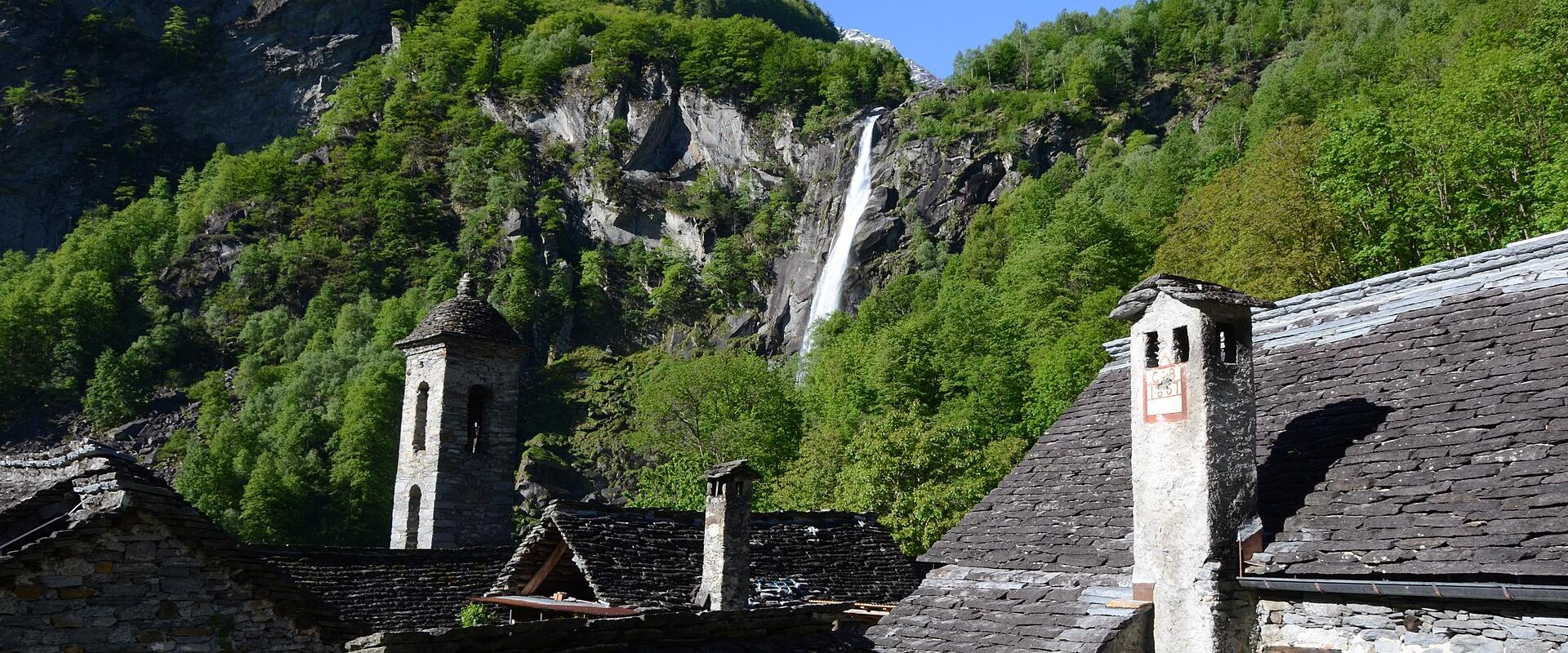
Val Bavona lies tucked away in the Italian-speaking canton of Ticino, a living museum of Alpine geology and traditional mountain life. The valley took its shape in the last glacial period, when great ice sheets carved a deep trough through the granite of the Lepontine Alps. As the ice retreated, meltwater cut steep rock faces and formed a series of waterfalls, of which the most famous is the Foroglio cascade, which plunges over a sheer cliff beside the hamlet of Foroglio. The valley opens at Bignasco and Cavergno, in the Vallemaggia, and runs north for about ten kilometres to San Carlo.
History and Heritage Historically, Val Bavona was a remote farming community. The stone hamlets, among them Foroglio, Sonlerto and Sabbione, were linked by old mule tracks used to move livestock between the valleys. In the 16th and 17th centuries the valley lived from chestnut growing and pastoral farming, and families moved up and down the slopes through the year. The steep ground and the isolation led many families to leave in the 20th century, and today only a few remain year-round. The landscape, with its hand-built terraces, bridges such as the Puntid, and houses built under or against giant boulders, is a heritage landscape of national importance, and a local foundation, the Fondazione Val Bavona, looks after the buildings and the paths.
Main Attractions Main attractions include several highlights that are easy to combine. Foroglio Waterfall is a spectacular drop of more than a hundred meters that can be heard echoing through the valley, with a steep but well-marked path to a viewpoint. Stone Hamlets such as Foroglio, Sonlerto and Sabbione are tightly grouped, with narrow alleys, chapels and stone roofs that blend into the rock, and a walk along the old path lets visitors explore them one by one. Granite Boulders and Cliffs draw climbers to the sheer faces, with routes from beginner to expert, and an Educational Trail explains the geology, plants and sustainable practices of the people who live here.
Activities Walking is the main activity, from short strolls between hamlets to day-long hikes along the valley floor and multi-day treks that link Val Bavona with the neighbouring Vallemaggia. Rock climbers and boulderers come for the granite. Photographers favour sunrise, when the first light catches the mist rising from the waterfalls. In summer, guided tours of the hamlets show traditional crafts, and in autumn the foliage adds a golden backdrop to the rugged landscape.
Getting There Italian is the language of the valley, and the road signs, menus and village names all speak of the south. Getting there takes some planning. The nearest large town is Locarno, reached by train from Zurich or Milan. From Locarno, a regional bus runs to Bignasco and Cavergno, where a PostBus service continues up the valley to the hamlets. Parking is limited, and the narrow road is best driven slowly. Hikers should wear sturdy boots, carry a waterproof jacket and expect limited mobile coverage.
Seasonal Advice The best period is late spring to early autumn, from May to October, when trails are clear of snow, waterfalls are at peak flow and temperatures range from about 15 to 25 degrees Celsius, which makes hiking comfortable. Spring offers alpine flowers, while summer brings lush greenery and long days. Autumn brings fine colours and fewer visitors. Winter visits are possible for experienced mountain walkers, but the valley receives little sun and many paths become icy and hazardous.
In summary, Val Bavona is a rare mix of dramatic scenery and preserved culture, a place of granite walls, falling water and stone hamlets, and a good choice for visitors who want a quiet, authentic alpine experience.
Best time to visit
Visit from May to September when trails are clear, waterfalls flow strongly, and temperatures are mild and sunny.
What to see in Val Bavona
Our picks first.
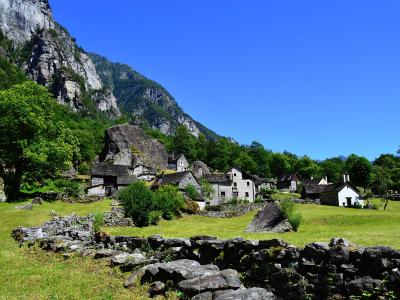
Sabbione (hobbiest Homes)
Granite houses built into rocks in Val Bavona
Historic Towns · Mountains
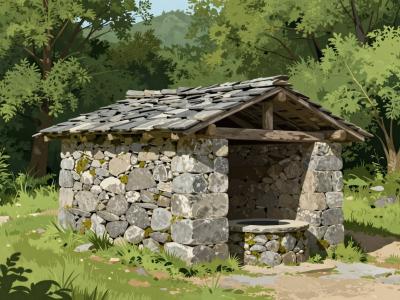
Bagn (village)
Stone village in Val Bavona, Swiss Alps
Cultural Experiences · History & Heritage
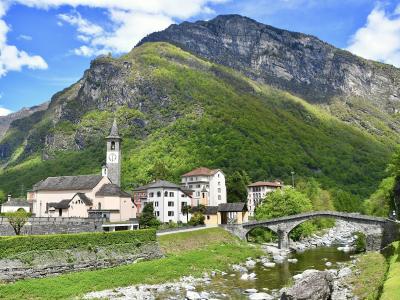
Bignasco (village)
Village in the Swiss Alps
Historic Towns · Mountains
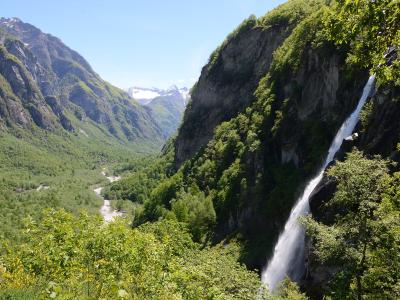
Foroglio Waterfall
110m waterfall in Val Bavona, Swiss Alps
Natural Wonders · Walking Trails
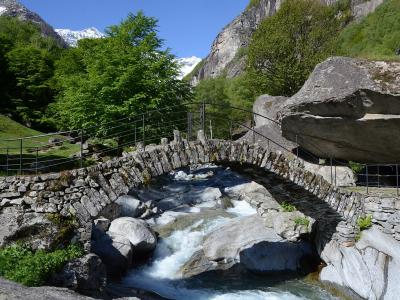
Puntid (Stone Bridge)
Historic stone bridge in Val Bavona
Free Activities & Adventure · History & Heritage
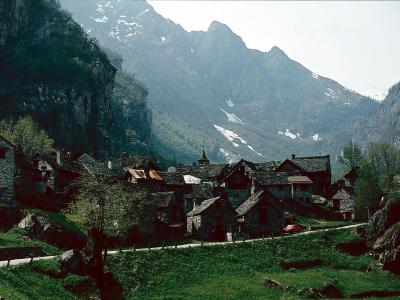
Sonlerto
16th-century granary in Val Bavona
Free Historic Towns · Mountains
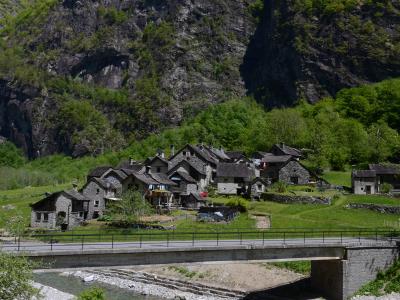
Splüni (grottos) In The Valley
Natural rock grottos in the Swiss Alps
Natural Wonders · Walking Trails
Val Bavona by interest
The same sights, grouped by what you came for.
Planning a visit to Val Bavona
Itineraries that include Val Bavona
Good to know
- Currency
- CHF
- Language
- German, French, Italian and Romansh
Quick Facts
Book your stay
Questions people ask
More places in Ticino
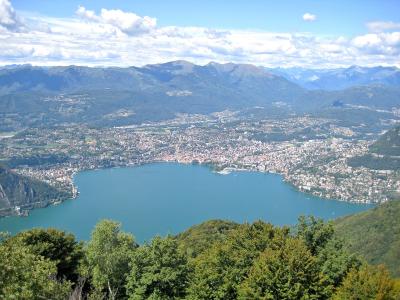
Ticino
Lugano
Lakeside city with Mediterranean flair and mountain views

Ticino
Bellinzona
UNESCO castle city with medieval walls and alpine views

Ticino
Morcote
Lakeside village with gardens, arcades, and Mediterranean flair

Ticino
Giornico
Romanesque churches, vineyards, and medieval bridges in Leventina