Giornico lies in the Leventina Valley, at a point where the Ticino River drops through a narrow stretch before opening toward Bellinzona and the lake. Its origins go back to Roman times, when the valley formed a vital north-south route across the Alps. Over the centuries it grew as a religious and trading centre, and the traffic over the Gotthard shaped it, leaving behind a remarkable legacy of Romanesque churches, medieval bridges and historic monuments.
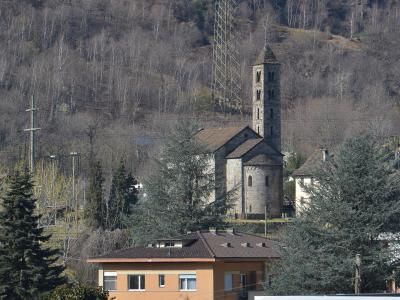
History and Heritage The village’s best-known landmark is the Chiesa di San Nicolao, a Romanesque church from the 12th century, praised for its elegant lines and for its well-preserved frescoes in the crypt and apse. Nearby, the Chiesa di Santa Maria del Castello stands on a rocky outcrop with a view over the valley, a glimpse of the region’s spiritual past. The seven historic churches reflect Giornico’s importance as a religious hub and its role in the spread of Christianity through the Alps. The Museo di Leventina explores the history, culture and daily life of the valley, and the Museo La Congiunta, a concrete gallery by the architect Peter Märkli, displays the sculpture of Hans Josephsohn, a modern touch that surprises first-time visitors. Stone bridges across the river, including the Ponte dei Cavalli, recall the village’s position on the historic Gotthard route.
Main Attractions The compact old town is best explored on foot, with narrow lanes, stone houses and hidden courtyards for slow discovery. Churches, museums and monuments are all within easy walking distance, while vineyards and hills provide scenic walks and wine tasting. The Monumento Della Battaglia commemorates the Battle of Giornico in 1478, when a few hundred Swiss confederates are said to have defeated a far larger Milanese force, a famous episode in Swiss history that is remembered with a memorial and a yearly commemoration. Churches, bridges and the memorial can be combined into a loop of an hour or two, and the setting between the river and the vineyards makes it easy.
Activities Beyond its historic sites, Giornico offers walking and cycling trails through vineyards and along the river, with views and a chance to experience the quiet Ticino countryside. Wine lovers can sample local Merlot and other varieties at village cellars and nearby producers. The mild climate suits outdoor activity from spring through autumn, and local festivals and markets give a taste of Ticinese culture and hospitality. The nearby Gotthard railway line, with its spiral tunnels, is a draw for rail fans, and the river offers pleasant picnic spots.
Getting There Giornico can be reached by train, with regular services to Bellinzona, Airolo and other towns in Ticino. By car the village is reached via the A2 motorway, with parking near the centre. The compact layout makes it easy to explore on foot, and local buses connect neighbouring villages and attractions.
Seasonal Advice April to October is the best period, when the weather is mild and the vineyards are green. Spring and early summer offer pleasant temperatures and colour, and autumn brings the grape harvest and rich foliage. Winter is quieter, with peaceful walks and the historic sites free of crowds. In every season Giornico’s mix of history, culture and nature makes an easy visit and a worthy stop in Ticino.
Best time to visit
April to October offers mild weather, blooming vineyards, and ideal conditions for exploring Giornico’s churches, museums, and scenic valley trails.
What to see in Giornico
Our picks first.
Giornico by interest
The same sights, grouped by what you came for.
Did you know?
Checked facts about Giornico, each with its source.
-
History
The 1478 Battle of Giornico
On December 28, 1478, a Swiss force of 600 soldiers defeated a much larger force of 1,000 Milanese troops in a battle that took place in this village.
Source: en.wikipedia.org
Planning a visit to Giornico
Itineraries that include Giornico
Good to know
- Currency
- CHF
- Language
- German, French, Italian and Romansh