Why Go in Summer
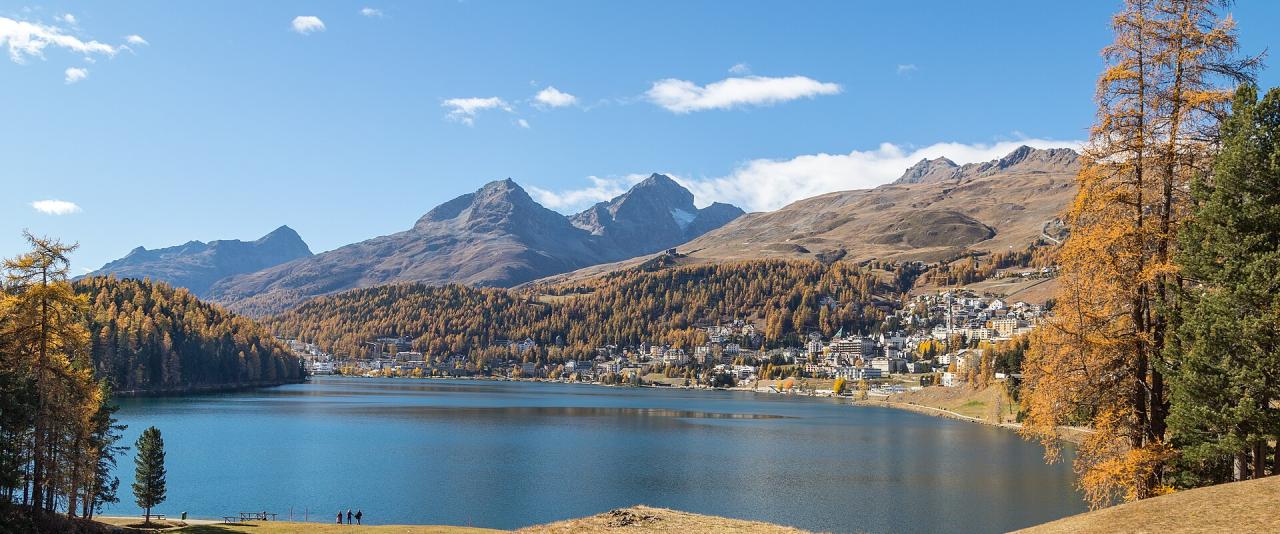
St. Moritz is best known for winter, but it has been a summer resort for longer. Its mineral springs drew visitors long before Caspar Badrutt's famous 1864 wager persuaded British summer guests to return for the winter. The town sits at about 1,800 m in the Upper Engadine, a high, wide valley with a chain of lakes, larch forests and peaks rising above 3,000 m. Summer days are often sunny and dry, and evenings are cool even in July, so warm layers are essential.
The Upper Engadine Lakes
Four lakes line the valley floor between St. Moritz and the Maloja Pass: Lake St. Moritz, Champfèr, Silvaplana and Sils. A walking path runs around Lake St. Moritz, an easy loop of about an hour that suits a first afternoon. Further up the valley, paths link Silvaplana and Sils along the shores, and the postbus runs along the valley if you want to walk one way only.
Sils Maria is a quiet village between the lakes of Sils and Silvaplana. Friedrich Nietzsche spent several summers here in the 1880s, and the house where he stayed is now the Nietzsche-Haus, a small museum. From Sils, the Val Fex side valley is closed to private cars and can be explored on foot or by horse-drawn carriage.
Lake Silvaplana is known for the Maloja wind, a regular afternoon valley wind on fine summer days that makes it one of Switzerland's best-known spots for kitesurfing and windsurfing. Schools and rental shops operate on the shore in summer. The water is cold, as you would expect at this altitude, so wetsuits are standard. Stand-up paddling and sailing are also possible on the lakes in calm conditions.
Viewpoints and Mountain Railways
- Muottas Muragl: a funicular from Punt Muragl, near Samedan, climbs to a terrace with one of the classic views straight down the valley over the lakes. A level panoramic path continues from the top station.
- Corviglia and Piz Nair: the funicular from St. Moritz Dorf to Corviglia runs in summer too, with walks and a cable car on to Piz Nair.
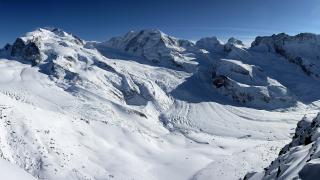
- Diavolezza: a cable car near the Bernina Pass rises to a viewpoint facing Piz Palü and the Bernina massif.
Many hotels in the Upper Engadine have offered guests free use of local mountain railways in summer for stays above a minimum number of nights. Ask about current terms when booking, since such offers can change.
Glaciers and Longer Hikes
The Morteratsch glacier trail starts at Morteratsch station on the Bernina line and follows the valley towards the glacier snout. Signposts along the way mark where the ice reached in past years, so the walk shows clearly how far the glacier has retreated. The path is mostly gentle and takes a couple of hours there and back.
For longer days, the Via Engiadina high-level route crosses the slopes above the valley in stages, and marked trails lead up to passes and huts. Check trail conditions and the weather before setting off, as thunderstorms can build in the afternoon.
Culture in Town
The Segantini Museum in St. Moritz is dedicated to Giovanni Segantini, who painted the Engadine landscape at the end of the 19th century. Its centrepiece is his large Alpine triptych. The town also hosts summer music and art events. Check the local events calendar for current dates rather than relying on fixed annual schedules.
Getting There and Around
St. Moritz is the terminus of the Rhaetian Railway's Albula line from Chur and the Bernina line to Tirano in Italy. The Albula and Bernina lines are a UNESCO World Heritage Site, and the journey is part of the appeal. Both the Glacier Express and Bernina Express panoramic trains run here, with compulsory seat reservations. Postbuses connect the valley villages, and the Swiss Travel Pass covers trains and postbuses, with discounts on most mountain railways.
The altitude also draws athletes: St. Moritz is a well-established base for altitude training by runners and cyclists, so expect to share the lakeside paths with them in summer.
When to Go
The main summer season usually runs from mid-June to mid-October, with mountain railways opening and closing on fixed dates. Late June and early July bring wildflowers, and September often has stable weather and fewer visitors. Snow can fall at altitude even in summer, so check forecasts before any high-level walk.