








Saint-Ursanne, often called the 'Pearl of the Jura,' lies in a bend of the Doubs under steep wooded cliffs, in the northwest of Switzerland. The settlement began in the 7th century, when the Irish monk Saint Ursicinus (Saint Ursanne), a companion of Columbanus, settled here as a hermit. A monastery followed, and the community grew into an important religious and trading centre. The medieval core remains largely intact, with narrow streets, fortified gates and stone houses that give a rare picture of Switzerland’s past.
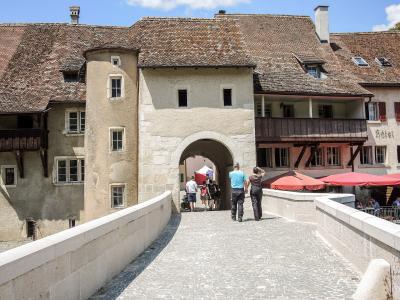
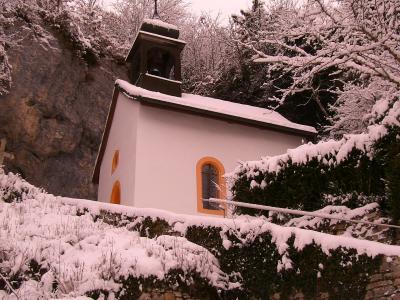
History and Heritage The centrepiece is the Romanesque collegiate church, built in the 12th and 13th centuries and dedicated to the founding saint. Its cloister, crypt and the adjoining Lapidary Museum show centuries of religious art and architecture, and the sculpted portal is among the best in the Jura. The stone bridge, the Pont St-Jean, was built in 1728 and spans the Doubs, linking the old town to the countryside, with a statue of John of Nepomuk at its centre. The Ermitage and Chapel of Saint-Ursanne, perched above the town, mark the site of the saint’s original hermitage and offer a view of the valley.
Main Attractions Saint-Ursanne’s small old town is best explored on foot, using the self-guided walking route from the local tourist office. Highlights include the city gates, the cloistered courts and the Lapidary Museum, with its medieval sculpture and fragments. The main street has cafés and shops selling local specialities, including Jura cheeses and craft beers, and a small medieval garden shows herbs and plants of the monastic past. The annual Medieval Festival turns the town into a stage for costumed parades, music and traditional crafts. Much of the stonework goes back to the Middle Ages, and many of the houses in the lanes have kept their original doorways and arches.
The River Doubs is central to life here, with canoeing, kayaking, swimming and riverside picnics. The surrounding Clos du Doubs is a quiet region of forests, meadows and riverbanks with signed trails for hikers and cyclists. Horse riding, paragliding and guided nature walks are also on offer.
Activities Saint-Ursanne is also a hub for outdoor recreation. Canoeing and kayaking on the Doubs are popular in summer, and the clear water invites swimming and fishing. The scenic setting is a favourite with photographers and painters, and the Tête de Moine cheese museum at Bellelay, within reach by car, offers a taste of the Jura’s food heritage. Seasonal events, such as beer tastings and local markets, add to the town’s community life.
Getting There Saint-Ursanne can be reached by train, with regular services from Delémont and other towns in the Jura. By car, the town is reached by country roads, with parking outside the old town. The compact layout makes it easy to explore on foot, and most attractions are a short walk from the main street. From Delémont the ride takes under half an hour, and the station sits within walking distance of the old town gate.
Seasonal Advice June to September is the best period, when the weather is warm and outdoor activities and festivals are in full swing. Spring and autumn offer quieter streets and soft colours, and winter brings a peaceful mood with cosy cafés and local hospitality. In every season Saint-Ursanne’s mix of medieval charm, river scenery and Jura traditions makes a memorable Swiss escape.
Best time to visit
June to September offers warm weather, lively festivals, and ideal conditions for exploring Saint-Ursanne’s medieval town and Doubs valley.
What to see in Saint-Ursanne
Our picks first.
Saint-Ursanne by interest
The same sights, grouped by what you came for.
Did you know?
Checked facts about Saint-Ursanne, each with its source.
-
Legend
Saint-Ursanne Is Shaped by a River
The town’s arched stone bridge, ancient city gates, and cloistered courtyards evoke a fairy-tale atmosphere, while its riverside setting provides opportunities for outdoor recreation such as canoeing, swimming, and hiking.
Source: Saint-Ursanne - Wikipedia
Planning a visit to Saint-Ursanne
Itineraries that include Saint-Ursanne
Good to know
- Currency
- CHF
- Language
- German, French, Italian and Romansh


