








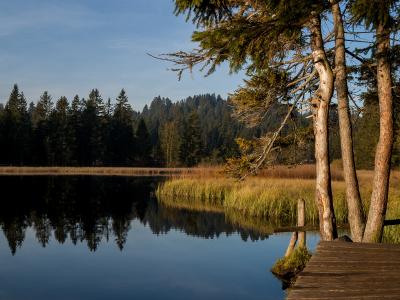
Étang de la Gruère lies at nearly 1,000 meters on the high plateau between Saignelégier and Tramelan, a natural jewel of the Swiss Jura. The pond and the surrounding peat bog came into being in the 17th century, when a stream was dammed to power a sawmill, and the wetland that formed has become a refuge for wildlife and a site of national ecological importance. Today the area is a protected nature reserve that keeps its delicate ecosystems and gives visitors a rare view of the region’s natural heritage.
History and Heritage The creation of Étang de la Gruère was an unplanned result of early industry, but over time the pond and the bog came to be valued for their beauty and variety of life. The reserve now covers more than 120 hectares, of which the peat bog itself extends over 56 hectares, with peat up to nine meters thick built up over thousands of years. The area is managed to keep its natural character, with boardwalks and marked trails that allow visitors to explore without harming sensitive habitats, and the surrounding farms still graze the plateau pastures in summer.
Main Attractions The main attraction is the easy, well-kept circular trail around the pond, with changing views of water, forest and moor. The walk takes about an hour and suits all ages, which makes it a popular outing for families and casual hikers. Signs along the path explain the plants, animals and history of the site. The pond is a favourite for picnics, and in summer confident swimmers may take a dip in its dark, peaty water, although there are no lifeguards or shallow entry points.
The reserve is a good place for nature lovers and photographers. Rare plants such as sundews and cotton grass grow in the bog, and dragonflies, frogs and a range of birds can be seen through the year. The calm setting and the lack of crowds make Étang de la Gruère’s shore an ideal place for quiet reflection and wildlife watching.
Activities Walking and nature observation are the main activities at Étang de la Gruère. The circular trail can be used all year, and each season has its own character: wildflowers and birdsong in spring, green forest and swimming in summer, rich colours in autumn and a hushed, snowy landscape in winter. Guided tours are available through the local nature centre, and the area is also popular for picnics and gentle exploration, with the larger network of plateau paths close at hand. Wooden boardwalks keep boots dry on the wettest stretches, and an early start gives the best light on the water, with mist often hanging over the bog in autumn.
Getting There Étang de la Gruère is easily reached by car, with parking near the trailhead at La Theurre. Public transport options include trains to Saignelégier, followed by a short bus or taxi ride. The reserve is well signposted, and the trails are clearly marked.
Seasonal Advice Late spring to early autumn is the best period, when the weather is mild and the trails are dry. Early morning or late evening visits give the most peaceful experience and the best chance to see wildlife. Summer is good for swimming and picnics, and autumn brings colour to the forest and moor. Winter visits are possible, but trails may be icy or snow-covered, so sturdy footwear is advised. In every season Étang de la Gruère’s calm beauty and natural variety make it a must-see in the Jura.
Best time to visit
Late spring to early autumn offers mild weather, blooming flora, and ideal conditions for walking, swimming, and enjoying Étang de la Gruère’s nature trails.
What to see in Étang de la Gruère
Our picks first.
Étang de la Gruère by interest
The same sights, grouped by what you came for.
Planning a visit to Étang de la Gruère
Itineraries that include Étang de la Gruère
Good to know
- Currency
- CHF
- Language
- German, French, Italian and Romansh
Quick Facts
Book your stay
Questions people ask
More places in Jura

Jura
Les Bois
Jura village with nature, heritage, and outdoor trails

Jura
Saignelégier
Jura plateau town with lakes, horses, and nature trails

Jura
Saint-Ursanne
Medieval riverside town with cloisters and Doubs valley views

Jura
La Chaux‑des‑Breuleux
Quiet Alpine Village in Jura’s Franches‑Montagnes