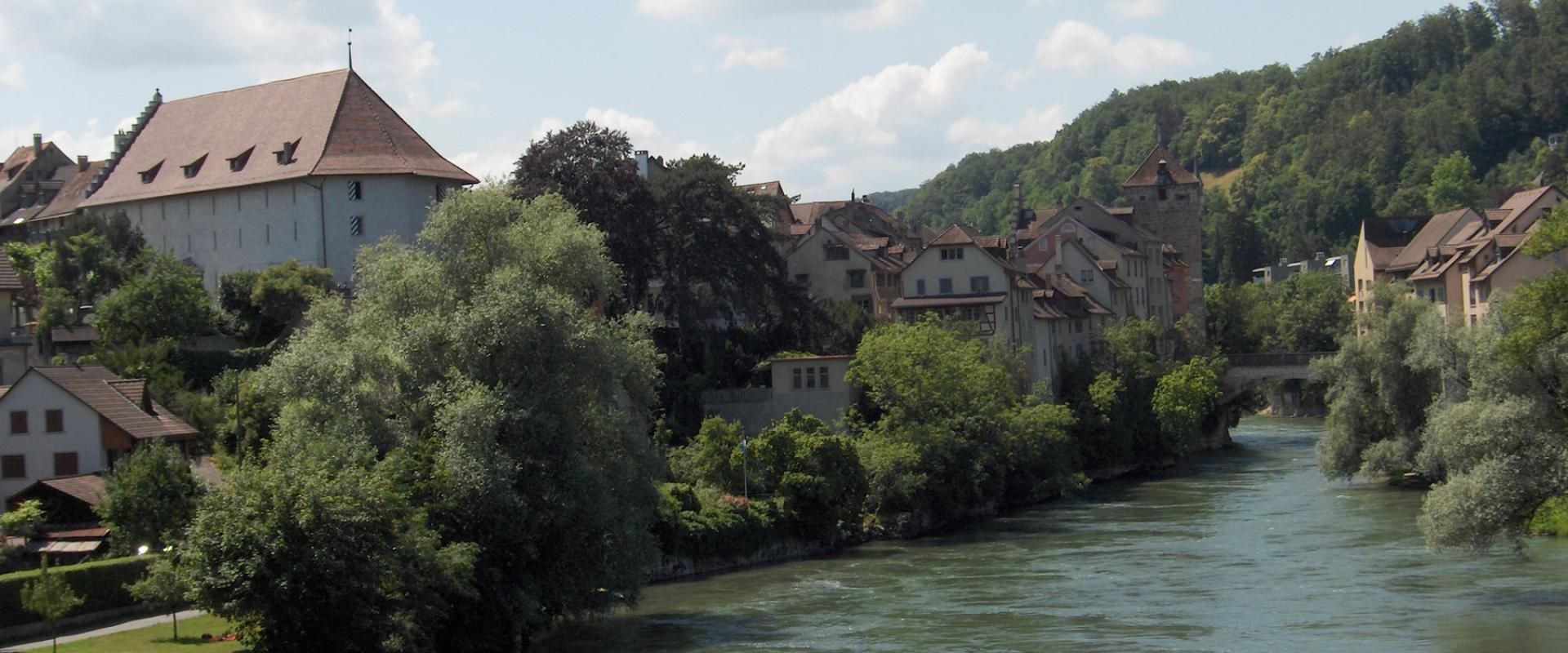
Brugg, whose name means 'bridge' in German, has been a crossroads of cultures and commerce since Roman times. The Aare here is forced through a narrow rock gorge, which made it an obvious place to cross, and the settlement beside the crossing grew into a small town. Close by the Romans established the Vindonissa legionary camp, which for several centuries housed thousands of soldiers and shaped the whole district.
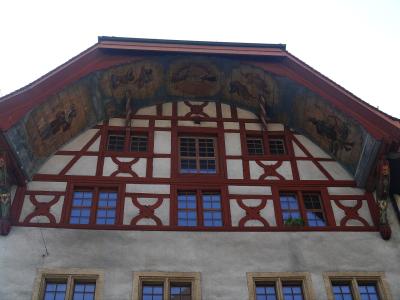
History and Heritage The medieval old town is compact and handsome, with narrow streets, historic townhouses and the Schwarzer Turm (Black Tower), a surviving piece of the old fortifications that dates from the Middle Ages. Across the river in Windisch, the Königsfelden Monastery was founded in the early 14th century after the murder of the Habsburg king Albrecht, and its choir keeps some of the finest medieval stained glass in Switzerland. Altenburg Castle stands above the Aare, with a view along the river and a feudal history that predates the town’s growth. The Aare gorge is the key to the town’s layout. Where the river narrows between rock walls, bridges have crossed since the Middle Ages, and a tower at the bridgehead guarded the crossing. A few kilometres away, in this corner of Aargau, stands the Habsburg castle, built in the 11th century, which gave its name to the dynasty that later ruled much of Europe. The Vindonissa site at Windisch also includes the outline of a Roman amphitheatre, whose ellipse can still be traced in the ground.
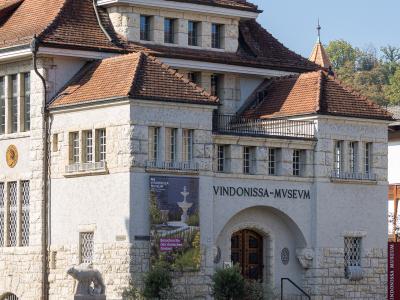
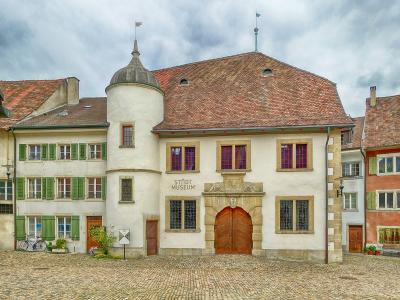
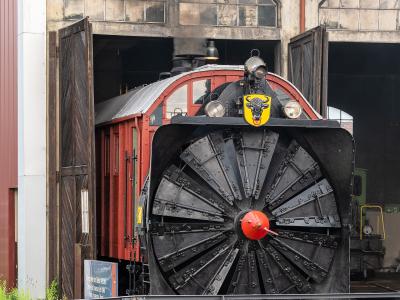
Main Attractions The Vindonissa Museum preserves the Roman story with weapons, tools, household goods and reconstructions, and the Stadtmuseum Brugg follows the town from Roman times to the present. The Brugg Railway Park gathers historic locomotives and railway equipment, with hands-on elements that suit children and enthusiasts. The Aare riverfront has quiet stretches for picnics and fishing, and the weekly markets show off regional food, crafts and traditions. Brugg is also a school and research town, with a campus of the University of Applied Sciences Northwestern Switzerland in the area, which gives the centre a student presence in term time and a pleasant supply of cafés. Visitors who want to combine sights can start at the museum, walk through the old town and finish at Königsfelden in an afternoon, and families can end the day with locomotives at the railway park.
Activities Outdoor life here is easy to arrange. Well-marked trails climb into the Jura and connect with the Jura Crest Trail, and cycling routes follow the Aare and its tributaries through villages and farmland. Canoeing and kayaking are popular on the river. The town’s cultural calendar includes concerts, art exhibitions and seasonal events, and the surrounding region adds castles and viewpoints for longer outings.
Getting There Trains run from Zurich, Basel and Bern at frequent intervals, and the trip from Zurich takes roughly half an hour. Road access is good and parking is available near the centre and the main sights, while local buses and cycle routes connect the surrounding villages.
Seasonal Advice May to September brings mild weather and the best conditions for trails, markets and the river. Spring and autumn are quieter and give good colours, and winter is a calm time of cafés and lights in the old town. Whatever the month, Brugg’s mixture of history, nature and Swiss hospitality makes it an easy stop.
Best time to visit
May to September offers mild weather, open trails, and ideal conditions for exploring Brugg’s Roman sites, castles, and riverside landscapes.
What to see in Brugg
Our picks first.
Brugg by interest
The same sights, grouped by what you came for.
Planning a visit to Brugg
Itineraries that include Brugg
Good to know
- Currency
- CHF
- Language
- German, French, Italian and Romansh