
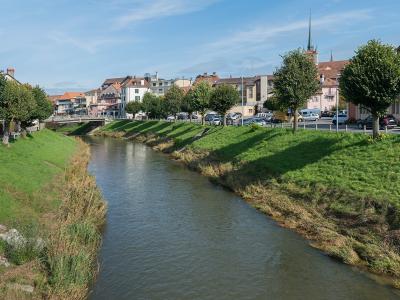
Payerne has been a crossroads since Roman times, and its place in the fertile Broye plain explains why. Roads, pilgrim routes and farm trade met here, and in the 10th century a priory was founded that would shape the town for a thousand years. Tradition links the foundation to Queen Bertha of Burgundy, whose name is still attached to the abbey and to local legends. The community that grew around the priory became a market town of some weight, and its centre still reflects that history.
The Abbatiale de Payerne is the reason most visitors come. It is an abbey church of the Cluniac order, built in the 11th and 12th centuries, and it is among the largest Romanesque churches in Switzerland. The interior is plain, tall and well proportioned, with a nave whose rhythm of columns carries the eye toward the apse. Carved capitals show animals, figures and foliage, and fragments of wall painting survive in the side chapels and the narthex, the entrance hall. The cloister and abbey buildings add to the visit. The church is a Swiss heritage site of national significance and is sometimes called UNESCO-listed, although it is not on the World Heritage list.
The old town is a good place to wander after the abbey. The market square is arcaded, with fountains and a weekly market, and the Banneret Fountain is one of the town's landmarks. Cafés and bakeries set tables outside on warm days, and the pace is that of a working Vaud market town rather than a tourist centre.
Payerne also has a modern identity through the Swiss Air Force, which operates from the air base just outside town. The Musée de l’aviation militaire de Payerne (Military Aviation Museum) shows aircraft, uniforms, models and interactive displays, and it is a favourite with families and aviation enthusiasts. For young visitors, Payerneland adds go-karting, mini-golf and other amusements, indoor and outdoor.
The Broye Valley is gentle cycling and walking country. Quiet roads and farm tracks lead to Lake Neuchâtel, to the Vully hills with their vineyards, and to nature reserves and small villages. The St. James Way, the Chemin de Saint-Jacques, passes through Payerne on its route toward Santiago de Compostela, and walkers on the pilgrim path often stop to see the abbey. Swimming, fishing and picnics are common on summer days at the lake.
Food in Payerne reflects the farmland around it. Menus feature regional cheese, charcuterie and fresh vegetables, along with white wines from the Vully slopes. Food festivals, open-air concerts and exhibitions add to the calendar in the warmer months.
Getting to Payerne is simple: trains run regularly from Lausanne, Bern and Fribourg, and the station is a short walk from the centre. Drivers will find ample parking near the old town. Most sights lie within a few minutes' walk of each other, and a bicycle is the best way to see the countryside.
June to September gives warm weather, lush vineyards and open lakes. Spring and autumn are milder and quieter, with soft colour in the fields and fewer people in the abbey. Winter is calm, with warm cafés and lights in the old town. Payerne’s mix of abbey, air base and farmland makes it a varied, uncrowded stop between the lakes of the plateau.
Best time to visit
June to September offers warm weather, vineyard views, and ideal conditions for exploring Payerne’s abbey, museums, and lakeside activities.
What to see in Payerne
Our picks first.
Payerne by interest
The same sights, grouped by what you came for.
Planning a visit to Payerne
Itineraries that include Payerne
Good to know
- Currency
- CHF
- Language
- German, French, Italian and Romansh
Quick Facts
Book your stay
Questions people ask
More places in Fribourg

Fribourg
Gruyères
Medieval hilltop town famed for cheese, castle, and art

Fribourg
Murten
Medieval lakeside town with ramparts, vineyards, and views

Fribourg
Estavayer-le-Lac
Medieval lakeside town with beaches, castle, and water sports

Fribourg
Düdingen
Lakeside village with hermitage, gardens, and nature trails