
Düdingen sits on the Sense plateau east of Fribourg, close to the point where the Sarine has been dammed into Lake Schiffenen. Its origins go back to medieval times, when the area developed as a farming and trading community along routes between Bern and Fribourg. Over the centuries Düdingen has grown into a lively residential centre while keeping its rural edges, with farms, orchards and woodland a few minutes from the station.
History and Heritage The best-known monument of the district is the Magdalena Hermitage, carved into the sandstone cliffs above the Sarine in the 17th century and still marked by chapels, caves and a hermit’s dwelling. It is a quiet place for reflection, with a view over the lake and the surrounding countryside, and it is reached on foot from the village. The old centre has historic churches and traditional houses, and Düdingen’s position between the German- and French-speaking parts of the canton shows in its bilingual community, street names and traditions. The Illens Castle ruins, in the municipality of Rossens, give a taste of the region’s medieval past.
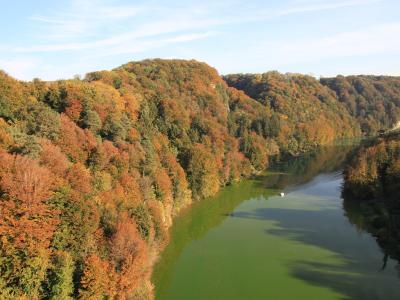
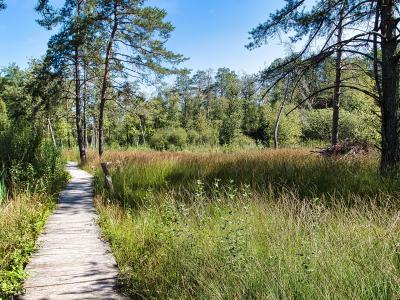
Main Attractions Lake Schiffenen is the centrepiece of Düdingen’s natural attractions, with swimming, fishing, boating and lakeside picnics. Paths along its shores serve walkers and cyclists, and birdwatching hides overlook the reeds. Closer to the village, the Düdinger Moos is a protected nature reserve of wet meadows, ditches and woodland, valued for its birds and plants. The Grandfey Viaduct, a long railway bridge across the Sarine gorge near Fribourg, makes a dramatic landmark, and the Gottéron Valley, a wooded gorge on the edge of the city, is a favourite for walkers who want river and forest in one outing. Fribourg’s Gothic cathedral and old town are only minutes away by train. The Sarine Gorge below the viaduct is a wild, wooded cut through the sandstone, and its paths give walkers a quiet alternative to the lake. Both German and French are heard on the village streets and in the shops, and the same mix shapes local festivals and menus.
Activities Outdoor activities begin at the village edge. In summer the lake is used for swimming, kayaking and paddleboarding, while hiking, cycling and birdwatching fill the days around it. The Magdalena Hermitage and local gardens give quiet spots for rest. Culture is also strong: Düdingen hosts regular markets and festivals, among them the Bad Bonn Kilbi, a respected music festival in late spring, and local events celebrate food, music and crafts. In winter the area is quieter, with walks along the lake and evenings in village restaurants. Cyclists can follow the signed routes along the Sarine toward Fribourg and back through farmland, and families often combine a morning at the lake with a walk up to the hermitage and an ice cream in the village.
Getting There Düdingen has regular train services to Fribourg, Bern and other Swiss cities, and the trip to Fribourg takes only a few minutes. By road it is well connected, with parking near the lake and the centre. Local buses and cycling routes reach the surrounding region.
Seasonal Advice May to September brings warm weather and the best lake conditions. Spring and autumn offer milder temperatures, colour and fewer people, and are good for walks and cultural outings. Winter is peaceful, with occasional snow. In any season Düdingen’s mix of nature, history and Swiss hospitality gives a visit an easy, unhurried feel.
Best time to visit
May to September offers warm weather, lake activities, and ideal conditions for hiking, cycling, and exploring Düdingen’s natural and cultural attractions.
What to see in Düdingen
Our picks first.
Düdingen by interest
The same sights, grouped by what you came for.
Planning a visit to Düdingen
Itineraries that include Düdingen
Good to know
- Currency
- CHF
- Language
- German, French, Italian and Romansh
Quick Facts
Book your stay
Questions people ask
More places in Fribourg

Fribourg
Gruyères
Medieval hilltop town famed for cheese, castle, and art

Fribourg
Murten
Medieval lakeside town with ramparts, vineyards, and views

Fribourg
Estavayer-le-Lac
Medieval lakeside town with beaches, castle, and water sports
Fribourg
Charmey
Alpine spa village with cheese dairies and mountain lakes