







- Where
- Raron, Valais
- Directions
- Directions
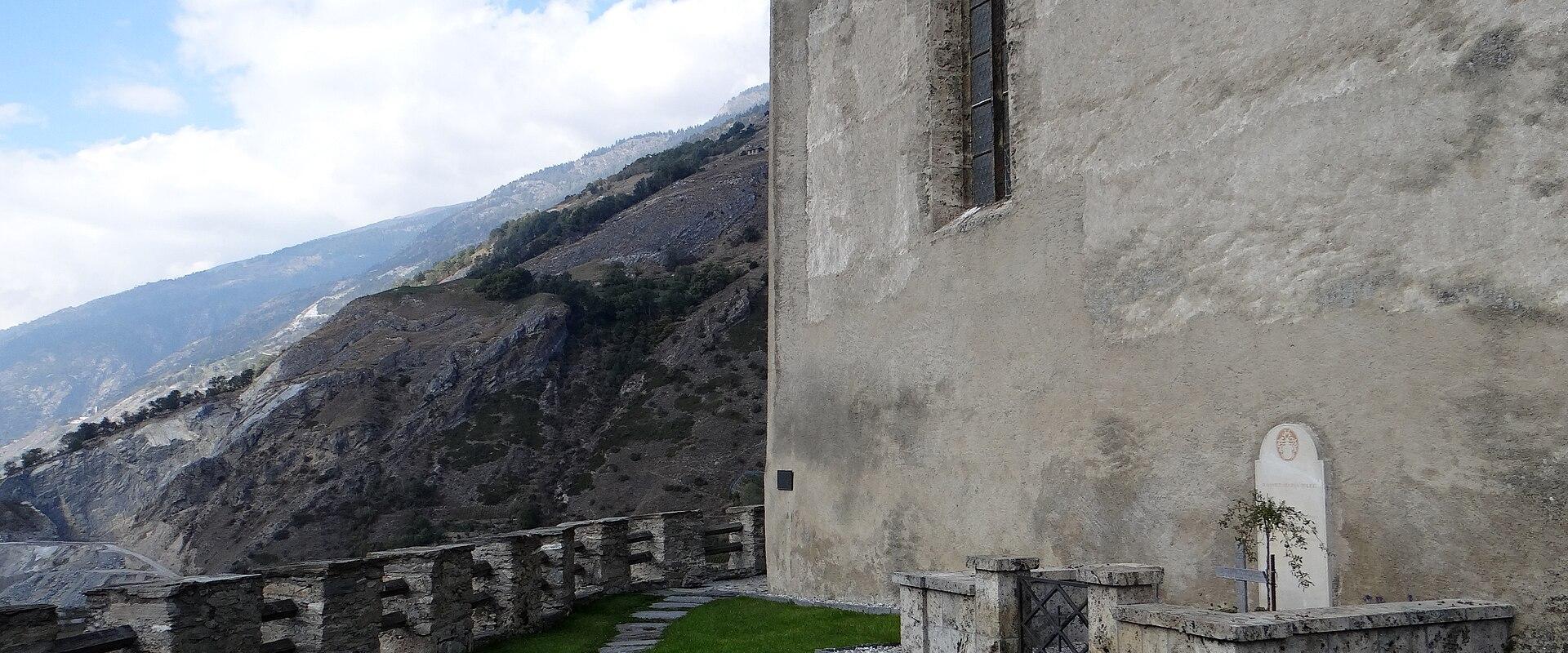
The grave of the poet Rainer Maria Rilke lies in the churchyard of the Burgkirche, the St. Romanus Church, on a rock above the village of Raron in the Upper Valais. Rilke was born in Prague in 1875 and became one of the most important German-language poets of the 20th century, the author of the Duino Elegies and the Sonnets to Orpheus, as well as the novel The Notebooks of Malte Laurids Brigge. He spent much of his life travelling and living in different European cities, and in 1921 he settled in the Valais, in the tower of Château de Muzot, near the town of Sierre, where in a burst of creative energy in February 1922 he completed the Duino Elegies and wrote the Sonnets to Orpheus. The landscape of the Rhone valley, with its dry slopes, vineyards and apricot orchards, had a deep effect on his late poetry.
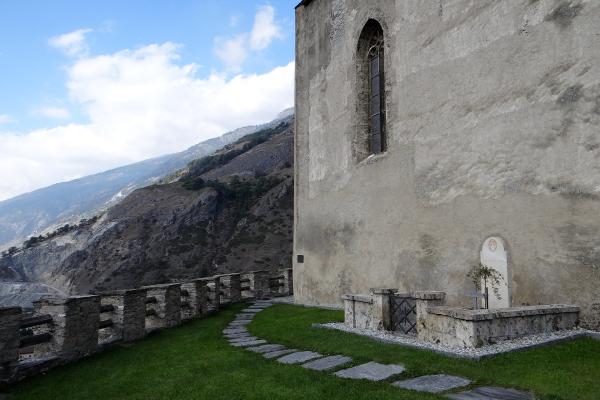
Rilke died on 29 December 1926 in a clinic at Val-Mont, near Montreux, after a long illness, at the age of fifty-one. He had expressed the wish to be buried in Raron, whose church stands on a hill with a wide view over the valley, and he was laid to rest there in January 1927. His grave lies beside the church wall, marked by a simple stone. On it is carved an epitaph that he wrote himself, three lines of verse in German which speak of the rose as a pure contradiction and of the desire to be no one’s sleep under so many eyelids, a famously enigmatic text that readers have interpreted in many ways.
A visit to the grave is a quiet and moving experience. The Burgkirche is a small, whitewashed church with an old tower, set on a rocky spur with a terrace and a graveyard, and the view from the walls takes in the Rhone valley, the opposite slopes and the mountains beyond. A rose is often planted or laid near the grave, in reference to the poet’s symbol. The atmosphere is calm, and visitors often come in silence, sometimes with a book of poems. The church itself is of interest, as it has parts dating back to the Middle Ages, and the interior is decorated in a simple style. Because it is a working church and a churchyard, visitors are asked to behave respectfully.
Raron also has other places of interest nearby, including the Joli Gorge walk and the Maxenhaus, and the Bietschtal valley with its adventure course. The village is reached by train on the Brig–Lausanne line and is a short walk from the station up to the church. Opening hours of the church may vary, though the churchyard is generally accessible.
The site suits readers of Rilke, lovers of literature and anyone who enjoys quiet places with a view, even in the Alpine landscape of the Valais. Allow an hour, and consider bringing a copy of the poems.
Categories
More photos coming soon
Nearby Attractions
Other places to visit in Raron
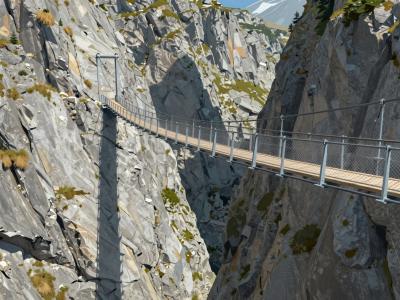
Bietschtal Bridge Adventure Course
Guided via ferrata through the Bietsch valley
Guided Tours · Mountains
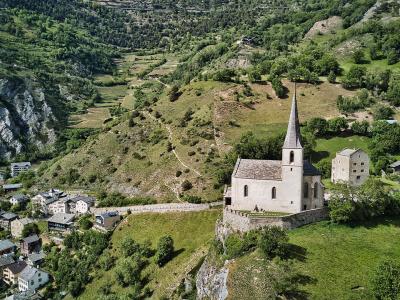
Burgkirche
Historic church in Raron, Switzerland
History & Heritage
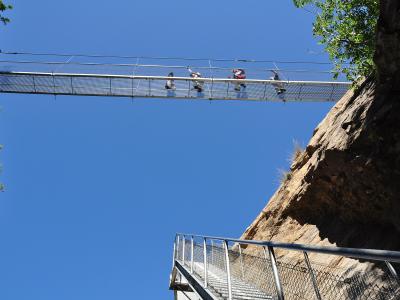
Jolischlucht (Suspended Footbridge)
25m suspension bridge in the Joli Gorge
Free Mountains · Viewpoints
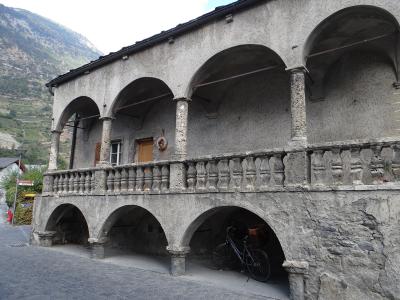
Maxenhaus
Historic house in Raron, Switzerland
History & Heritage · Urban Exploration
Questions people ask
Quick Facts
Best Time to Visit
July to September offers warm weather, open trails, and ideal conditions for hiking, sightseeing, and exploring Raron’s churches and valley views.