







- Hours
- Monday, Tuesday, Thursday, Friday, Saturday & Sunday: 10 a.m. – 6 p.m.; Wednesday: 10 a.m....
- Where
- Raron, Valais
- Directions
- Directions
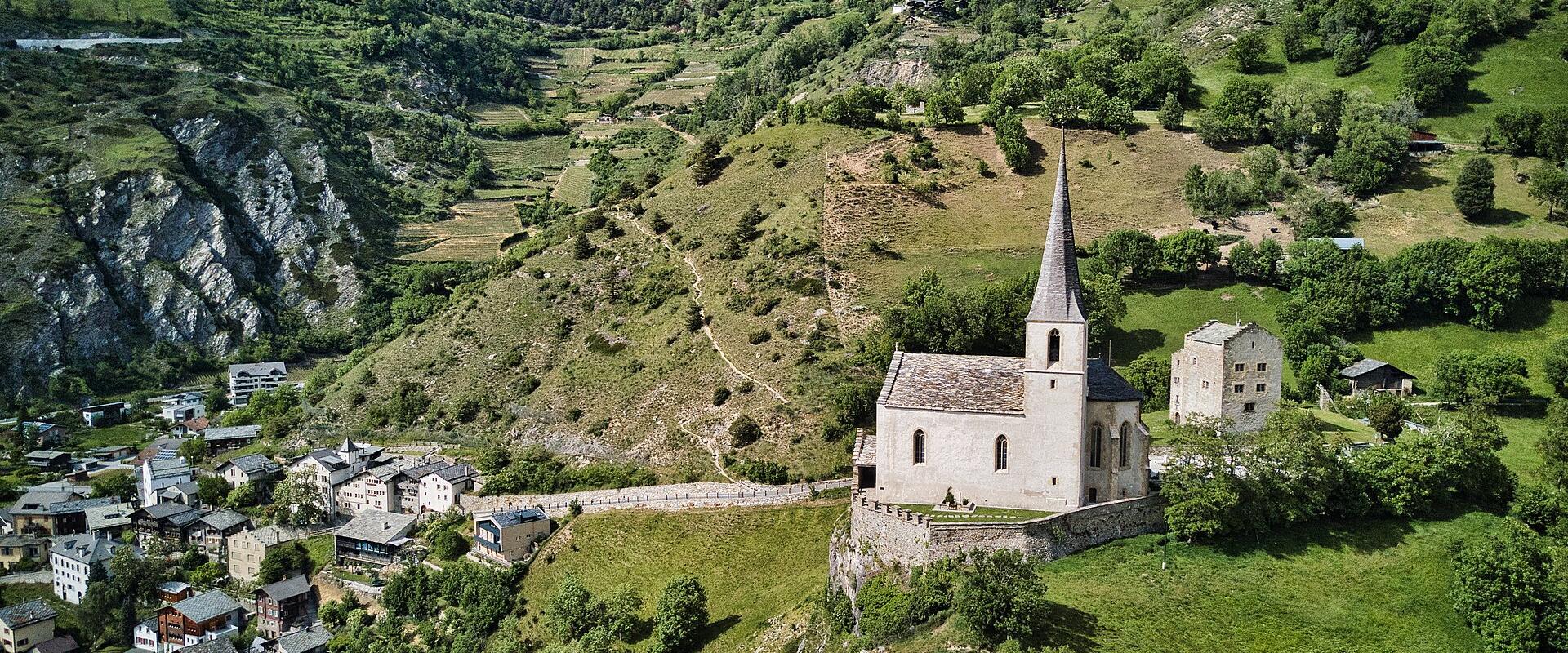
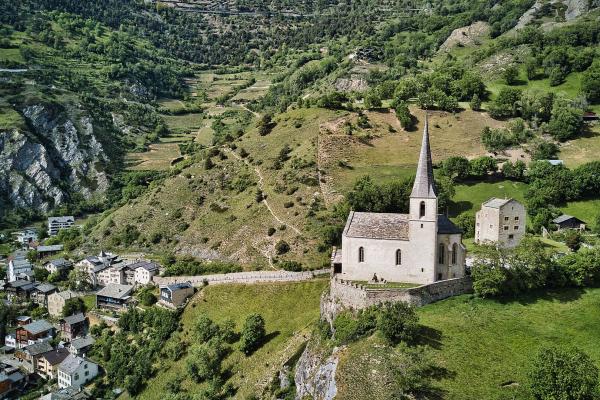
The Burgkirche in Raron stands on a steep rock above the village, in the Upper Valais, and it is one of the most striking church sites in the Swiss Alps. The name means castle church, and it recalls that the hill was once the site of the castle of the lords of Raron, a powerful noble family who ruled much of the Valais in the Middle Ages. The castle was destroyed in the fifteenth century during a conflict between the Valais communities and the nobility, and the church was later built on the site, using the rock as its foundation. The church is dedicated to Saint Romanus, and it overlooks the Rhône valley, which stretches east and west beneath it.
The church is a late Gothic building from the early sixteenth century, built under the direction of Ulrich Ruffiner, a master builder from the Valais who worked on many churches and bridges in the region and was one of the best-known architects of his time. The interior is partly cut out of the living rock, which forms one of the walls, and the contrast between smooth plaster, rough stone and dark wood gives a particular atmosphere. The vaulting is a network of ribs that spreads across the ceiling in a decorative pattern. The altars and the carved furnishings reflect the religious traditions of the Valais, which has remained strongly Catholic, and the building contains paintings and statues from several centuries. A path with covered steps leads up from the village, and the final stretch passes beneath an archway.
A reason many people come is the cemetery beside the church, where the poet Rainer Maria Rilke is buried. Rilke, born in Prague and one of the greatest German-language poets, spent his last years in Switzerland, in a small medieval tower called Muzot near Sierre, where he completed his Duino Elegies and wrote the Sonnets to Orpheus in a burst of inspiration in 1922. He died in a clinic near Montreux at the end of 1926 and, according to his own wishes, was buried at Raron, in a place he had chosen for its view. His grave lies against the church wall, covered with roses, and carries an epitaph he wrote himself, a short poem about the rose as a pure contradiction and the desire to be no one's sleep under so many eyelids. Visitors often leave flowers or notes, and the site has a quiet, contemplative atmosphere.
From the churchyard, there are views over the roofs of Raron and the valley, and across to the mountains on the other side. The village below has traditional wooden houses, including the Maxenhaus, and nearby attractions include the Jolischlucht, a gorge with a suspended footbridge, and the Bietschtal bridge adventure course. The railway station is in the valley, and the walk up to the church takes about ten minutes by steps.
The church is a place of worship, so visitors should dress respectfully and keep quiet, and opening hours vary, so check locally before you go. It suits history readers, poetry lovers and anyone who enjoys atmospheric places. Allow about an hour for the church, the grave and the view. Wear sturdy shoes for the steps.
Categories
More photos coming soon
Opening Hours
- Open
- Monday, Tuesday, Thursday, Friday, Saturday & Sunday: 10 a.m. – 6 p.m.; Wednesday: 10 a.m. – 8 p.m.
Hours and prices change, especially out of season. Check with the venue before you go.
Nearby Attractions
Other places to visit in Raron
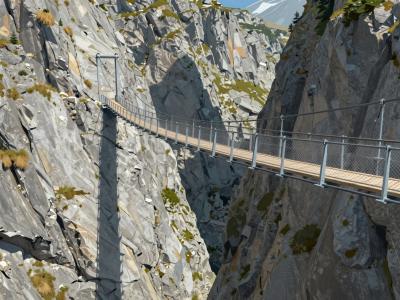
Bietschtal Bridge Adventure Course
Guided via ferrata through the Bietsch valley
Guided Tours · Mountains
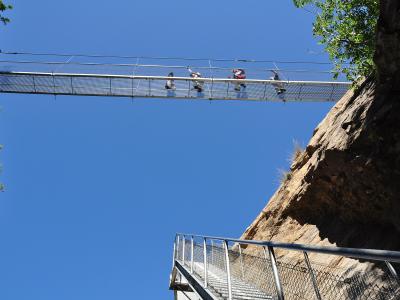
Jolischlucht (Suspended Footbridge)
25m suspension bridge in the Joli Gorge
Free Mountains · Viewpoints
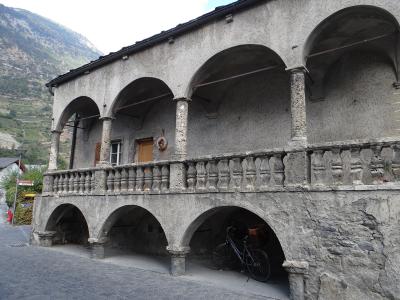
Maxenhaus
Historic house in Raron, Switzerland
History & Heritage · Urban Exploration
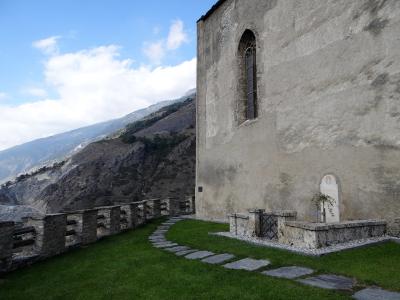
Tomb Of Poet Rainer Maria Rilke
Rilke's tomb in St. Romanus Church, Raron
Cultural Experiences · History & Heritage
Questions people ask
Quick Facts
Best Time to Visit
July to September offers warm weather, open trails, and ideal conditions for hiking, sightseeing, and exploring Raron’s churches and valley views.