







- Where
- Bellinzona, Ticino
- Directions
- Directions
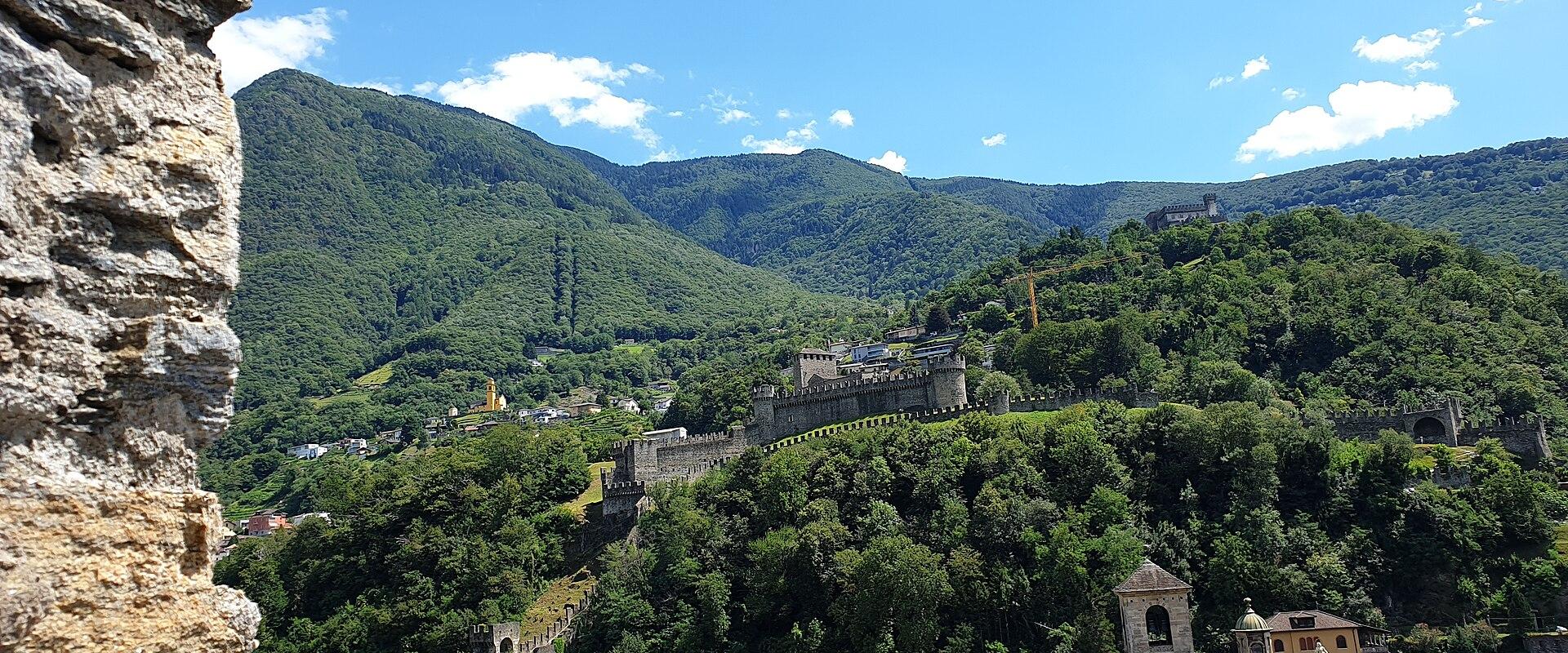
Bellinzona sits where the Ticino valley narrows, a few kilometres north of Lake Maggiore, on the route linking the Lombard plain to the Alpine passes of San Bernardino and Gotthard. Whoever controlled this gap controlled traffic across the Alps, and the town grew up around a group of fortifications that is now one of the best-preserved medieval defensive systems in the Alps. Together the three castles and the walls joining them were inscribed on the UNESCO World Heritage list in 2000, and they dominate the town's skyline.
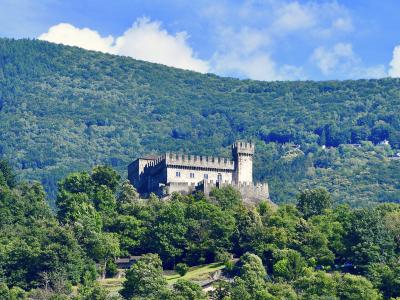
The three castles are Castelgrande, Montebello and Sasso Corbaro, each with its own character. Castelgrande is the oldest and largest, built on a steep rock in the middle of the town, where the earliest settlement is thought to go back to prehistoric times. Montebello, on a slope to the east of the town, was enlarged in the fifteenth century into a complex with a keep, residential building and several courtyards, and it now houses a museum. Sasso Corbaro, the highest of the three, was built in 1479 on a ridge above the town as a late addition to the system. Linking Castelgrande to the river is a long curtain wall, called the Murata, which once closed the valley completely and prevented armies from passing through without permission. The dukes of Milan, the Visconti and later the Sforza, did much of the building, in competition with the Swiss cantons to the north, and the fortress passed to the Swiss in 1500.
Visiting the site means walking up through gates, across courtyards and along ramparts, with wide views over the town and valley. Castelgrande includes a historical and archaeological museum, and the other castles have exhibitions that change from season to season. The walls themselves can be followed on foot, and the contrast between old stone and modern restoration work gives the site a distinctive character. The restoration of the twentieth century added a lift through the rock and discreet new elements that make the visit easier.
The fortress also tells a larger story about the Alps. In the Middle Ages the passes were highly valuable routes for trade and troop movements, and the towns controlling them were rich and heavily defended. Bellinzona's walls, towers and castles show how that wealth and tension translated into architecture. Today the three castles are one of the most visited places in Ticino, and the town's old centre has arcades, piazzas and a market that make it pleasant to explore.
The fortress suits history readers, photographers, walkers and families. Most visitors start with Castelgrande, which is a short walk from the station, then continue to Montebello and, with more effort, Sasso Corbaro. Allow a full day to see all three and the walls, or half a day for one or two. Opening times and tickets vary by season, so check the official Bellinzona tourism website before you go, and wear sturdy shoes for the steep paths.
Categories
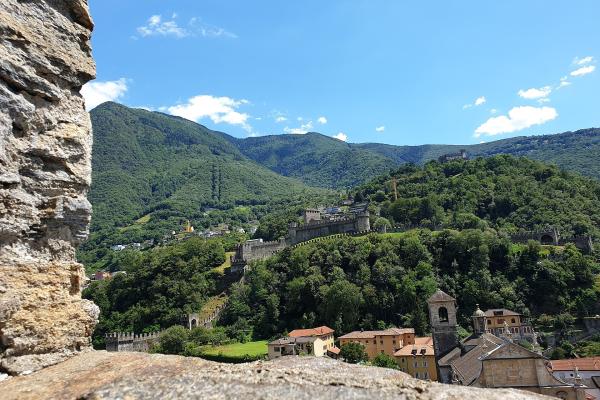
More photos coming soon
Nearby Attractions
Other places to visit in Bellinzona
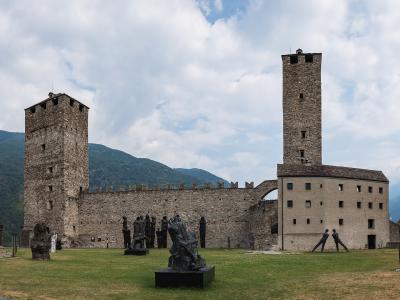
Castelgrande
Largest medieval castle in Bellinzona’s UNESCO fortress
History & Heritage · Castles
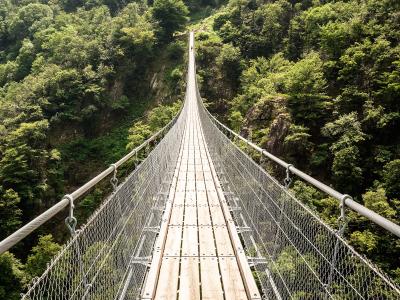
Carasc Tibetan Bridge
270m Tibetan bridge 130m above Bellinzona valley
Activities & Adventure · Natural Wonders
Sasso Corbaro Castle
Medieval hilltop fortress with panoramic views
History & Heritage · Castles

Bellinzona Local Market
Weekly market with local food and crafts
Cultural Experiences · Food & Gastronomy
Questions people ask
Quick Facts
Best Time to Visit
April to October offers mild weather, open castles, and ideal conditions for exploring Bellinzona’s old town, markets, and hiking trails.