- Where
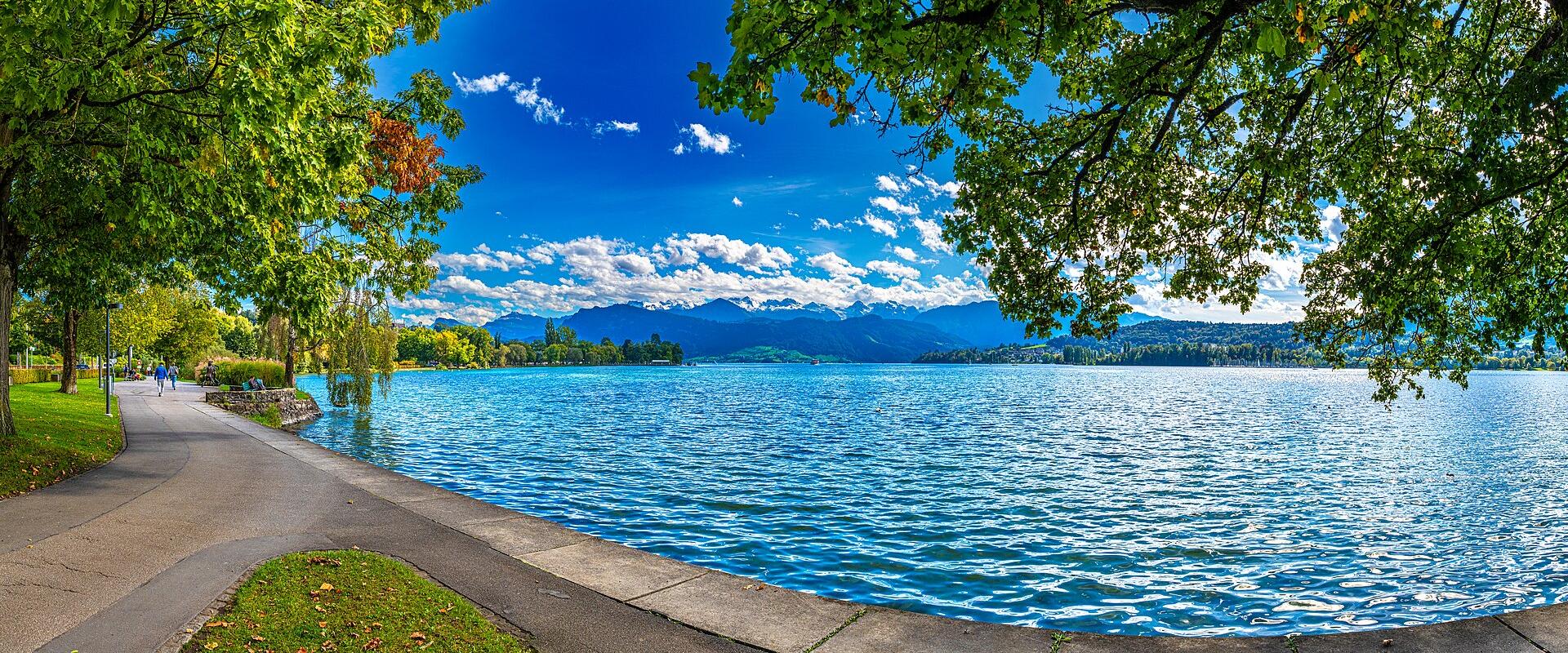
- Lake Lucerne, Central Switzerland
- Directions
- Directions
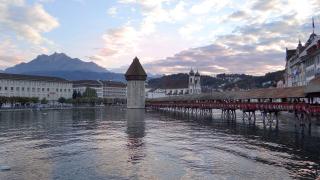
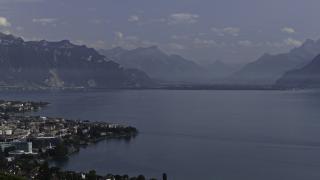
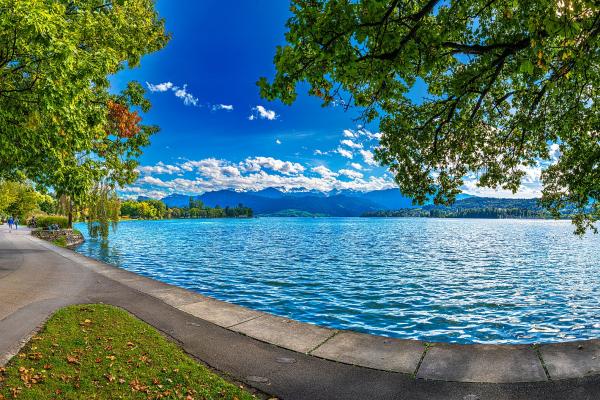
Lake Lucerne, the Vierwaldstättersee, is the lake at the centre of Switzerland, and its shape is unusual. It is not a single basin but a chain of connected arms, with deep bays and narrow passages, spreading between steep mountains in a form that resembles a cross, and it touches the cantons of Lucerne, Uri, Schwyz, Obwalden and Nidwalden, the original heartland of the Confederation. The lake covers about a hundred and fourteen square kilometres and is more than a hundred metres deep in places, and the mountains rise steeply from the shore, so that every turn of a boat gives a changed view of rock, forest and snow. It is one of the finest places in the country for panoramas, and it has been a goal of travellers since the eighteenth century.
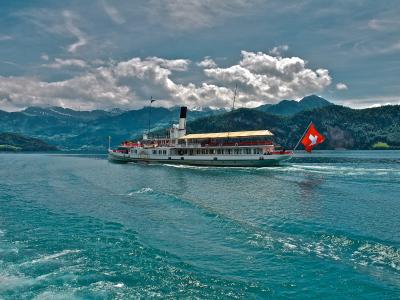
The best way to appreciate it is by water. The lake is served by a fleet of passenger boats, among them a group of historic paddle steamers, some more than a hundred years old, with steam engines that can be seen turning behind glass. The boats link the towns and villages around the shore, from Lucerne to Flüelen at the far end of Lake Uri, calling at lakeside places such as Vitznau, Weggis, Brunnen and Beckenried. A journey of a few hours gives views of the Rigi, the Pilatus, the Bürgenstock and the Urner Alps, and the changing relationship between the water and the peaks is the main pleasure. Travelling by boat requires no effort, and seats on the open decks are good for photography, with cafés and restaurants on board.
For a high view, mountain railways and cable cars lift you above the lake. The Rigi, a wide, isolated mountain between Lake Lucerne and Lake Zug, is known as the Queen of the Mountains, and it was reached by the first mountain railway in Europe, a rack railway from Vitznau that opened in 1871. From the summit, the panorama takes in the lakes, the plateau and a great arc of Alps, and the sunrise from the top has been a famous attraction for generations. Opposite stands the Pilatus, a craggy mountain reached by the steepest cogwheel railway in the world, with a gradient of up to forty-eight percent, and by cable car from Kriens. The Stanserhorn offers another view, reached by a funicular and an open-top cable car, with a terrace above the lake and the Alps. Each viewpoint has a different character, and the choice depends on your time and the weather.
The lake lies in an area that is also a natural frame for Swiss history. Its shores are associated with the legend of William Tell, with the Rütli meadow, the site of the legendary oath, and with the old routes over the Gotthard. The climate on the lake is mild, with a warm foehn wind in autumn that can bring dramatic clarity, and storms can sweep across the water, so conditions change quickly.
Timetables of boats and mountain lifts vary with the season, and some lines are closed for maintenance or in winter, so check schedules before you plan. Travel passes can reduce the cost of boats and trains. The region suits all visitors, and a day on the lake with one mountain excursion is a good introduction. Clear days offer the best visibility, and early starts help avoid crowds and afternoon cloud.
Categories
More photos coming soon
Nearby Attractions
Other places to visit in Lake Lucerne
Questions people ask
Quick Facts
Best Time to Visit
Late June to early September offers warm weather, clear lake waters, and ideal conditions for cruises, hiking, and exploring Lake Lucerne’s attractions.