







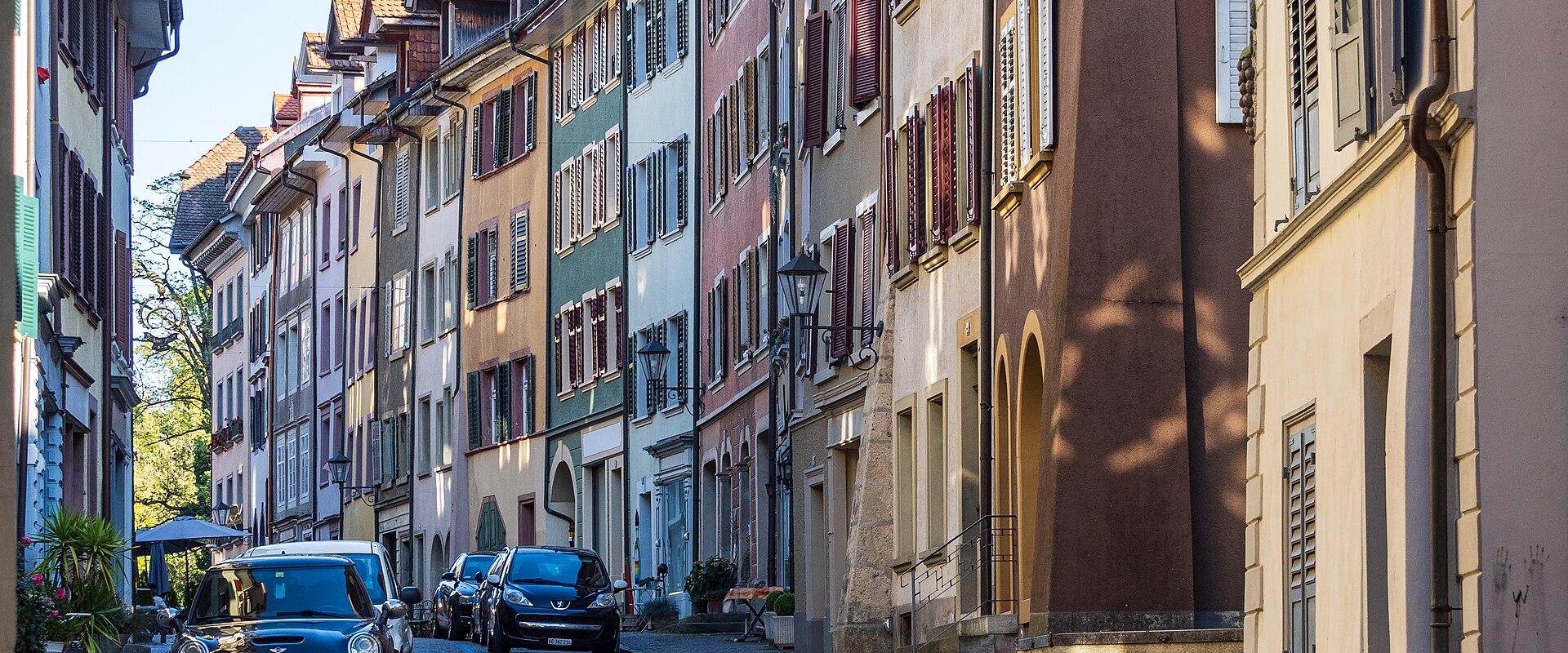
Laufenburg Old Town And Rhine Bridge
Historic twin towns linked by the Rhine Bridge
- Where
- Aargau, Aargau
- Directions
- Directions
Laufenburg is a small town on the Rhine in the canton of Aargau, and it is one of two towns of the same name that face each other across the river, one in Switzerland and the other in Germany. For centuries they were a single town, under the rule of the Habsburgs, but in 1801 the peace treaty of Lunéville made the Rhine the border between France and the Holy Roman Empire in this area, and the town was divided into two. Swiss Laufenburg ended up on the south bank and German Laufenburg on the north. The two halves continued to live as neighbours, and today they are linked by a bridge and by shared festivals, traditions and a dialect.
The name comes from an old word for rapids. The Rhine here once ran through a narrow, rocky gorge, where it was squeezed into a channel only a few metres wide, and the water thundered through the Laufen, the rapids that gave the town its name. The rapids were famous for salmon, which gathered below them, and for the difficulty they created for river traffic. They disappeared in the early twentieth century, when a large hydroelectric power station was built at the site, one of the first on the Rhine. Today the river is calmer but still wide and strong, and the power station and weir are visible near the bridge.
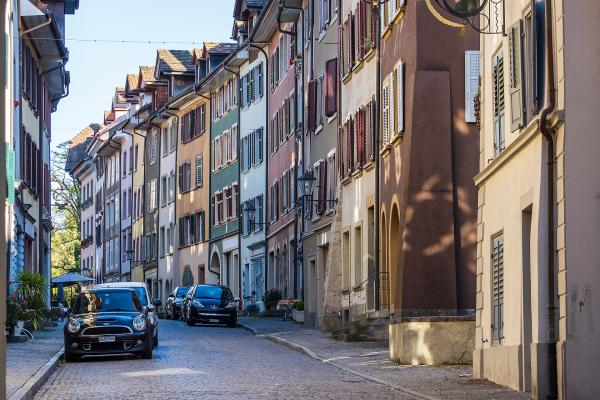
The old town on the Swiss side lies on a slope above the river, with narrow lanes, stepped alleys, old gates and houses with steep roofs, some of which date back centuries. The medieval layout is largely preserved, with small squares and a parish church that dominates the skyline. Walks through the lanes take you past arches, fountains and courtyards, and the riverfront has a promenade with views across to the German town. Cafés and restaurants serve local dishes, and there are a few small shops and galleries.
The Rhine bridge, which links the two halves, is the focus of visits. It is a pedestrian and traffic bridge that crosses the river in a single arch, and in the middle a marker shows the border, where you can stand with one foot in Switzerland and one in Germany. The view from the bridge looks over the old roofs on both sides, the river and the wooded hills behind. At the end of the bridge you can explore German Laufenburg, which has its own old town with a similar character and its own church, so a walk can take in both halves of the town.
The twin towns are known for their carnival, called Fasnacht, which is celebrated in both and has long roots in the local tradition, and for cross-border events that bring residents together. The visit suits walkers, history readers, photographers and families, and the two old towns can be covered in about two hours. Carry a passport or identity card in case of border checks, check public transport schedules before you plan, and allow extra time if you want to stop at a café on either side.
More photos coming soon
Nearby Attractions
Other places to visit in Aargau
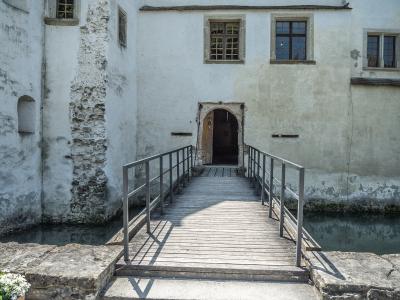
Schloss Hallwyl
Moated 12th-century castle in Aargau, Switzerland
Cultural Experiences · History & Heritage

Aargauer Kunsthaus
Swiss art from 18th century to today
Cultural Experiences · Museums
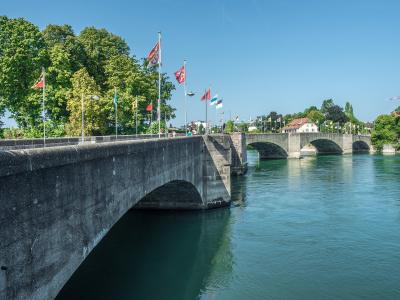
Old Rhine Bridge Rheinfelden
Historic stone bridge spanning the Rhine in Rheinfelden
History & Heritage · Urban Exploration

Thermal Spas Of Aargau
Thermal springs and wellness baths in Aargau
Activities & Adventure
Questions people ask
Quick Facts
Best Time to Visit
May to September offers mild weather, blooming landscapes, and ideal conditions for hiking, sightseeing, and exploring Aargau’s castles and towns.