







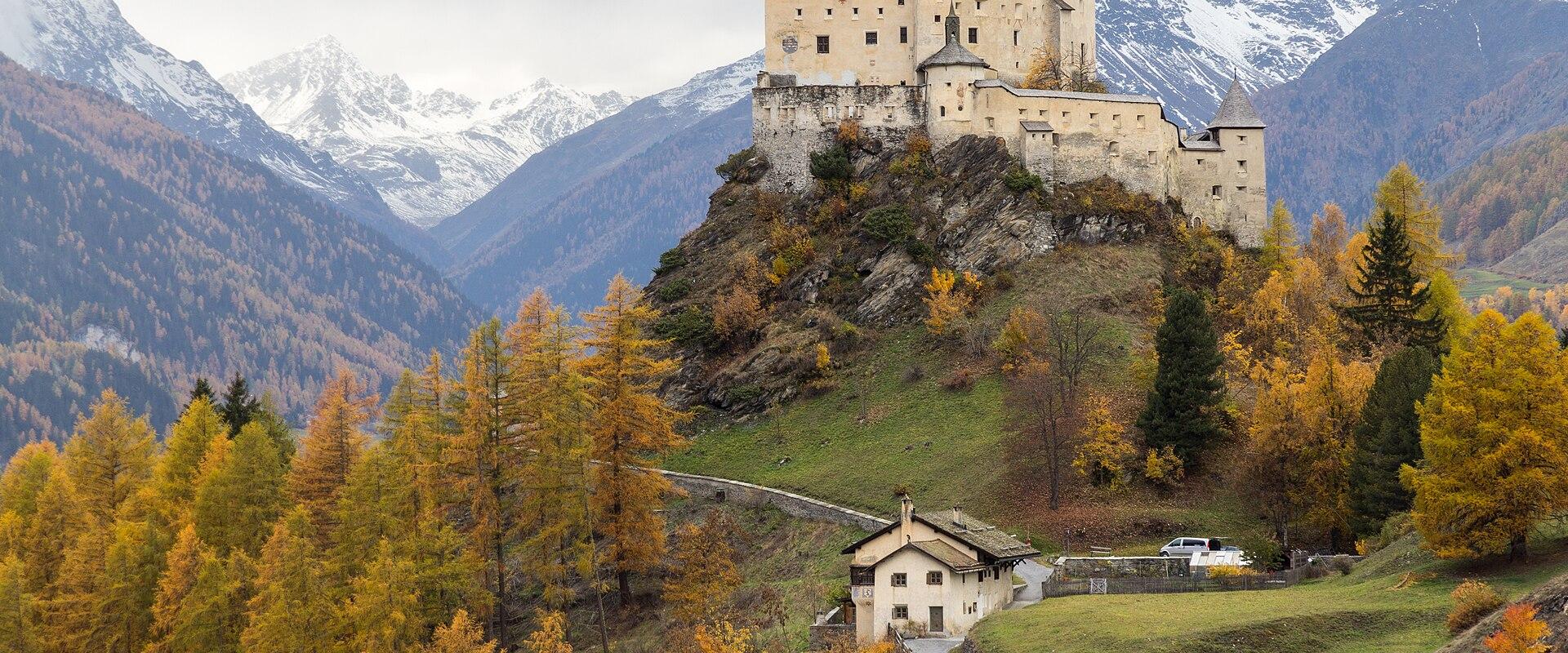
Tarasp sits at about 1,400 meters in the Lower Engadine, where the Inn valley widens between forested slopes and the high peaks of the Swiss National Park lie to the south. The village’s story is inseparable from its landmark, Tarasp Castle, which has watched over the valley since the 11th century. It was first built as a fortress by the Lords of Tarasp, and it changed hands many times over the centuries, reflecting the region’s turbulent history between Austria and Switzerland. Tarasp was an Austrian enclave inside Graubünden until the early 19th century. In the early 20th century the castle was restored by the industrialist Karl August Lingner, the Dresden businessman behind the mouthwash Odol, who filled it with art, antiques and a grand organ and turned it into a cultural monument.
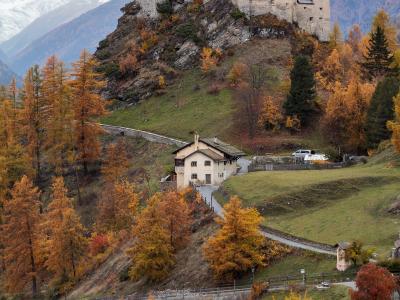
Today, Tarasp Castle is open to visitors for guided tours, which lead through medieval halls, richly furnished salons and the organ room, one of its great curiosities. The castle also hosts concerts, art exhibitions and special events, blending history with contemporary culture. From its ramparts, visitors have sweeping views of the Engadine valley, the village below and the surrounding peaks, and the approach from the village, up a short wooded road, is part of the experience.
The village itself is quiet, with traditional Engadine houses, deep-set windows, sgraffito decoration and unhurried streets. The Katholische Kirche Hl. Dreifaltigkeit (Church of the Holy Trinity) is another architectural gem, and the nearby Taraspsee (Lake Tarasp), also known by its Romansh name Lai da Tarasp, offers a peaceful spot for reflection, photography and picnics. The area is dotted with artist studios and galleries, such as the Atelier Rudolf Glaser, which show the creative life of the valley. Romansh is still spoken in the Lower Engadine, and place names on signs and menus give a taste of the language.
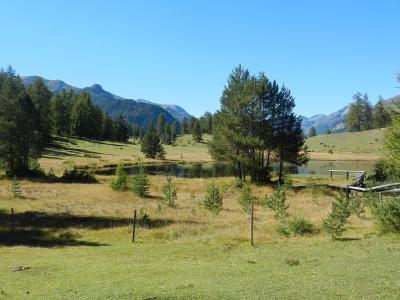
Tarasp is a gateway to outdoor adventure. Well-marked hiking trails lead through forests and meadows to panoramic viewpoints, with routes for all levels, including a walk to the small mountain lake of Lai Nair above the village. The nearby Swiss National Park, Switzerland’s only national park, is a haven for wildlife and alpine flora, with guided walks and educational programmes. In winter, the region offers cross-country skiing, snowshoeing and winter hiking, and the valley is known for crisp, sunny weather.
Wellness seekers will appreciate Tarasp’s closeness to the spa town of Scuol, famous for its mineral baths and wellness centres. After a day of exploring, visitors can relax in the Bogn Engiadina mineral baths or try local cuisine in one of the area’s cosy restaurants, and Tarasp itself was once a spa resort with its own springs and a grand hotel era.
Getting to Tarasp is simple: the village is reached by train to Scuol, followed by a short bus or taxi ride. By car, scenic alpine roads connect Tarasp with the rest of the Engadine and the canton of Graubünden. The compact layout makes it easy to explore on foot.
The best time to visit Tarasp is from June to September, when the weather is mild, the hiking trails are open and the castle’s cultural programme is in full swing. August is the busiest month, with concerts and events. Spring and autumn offer quieter trails and fine colours, while winter suits snow sports and cosy alpine stays. In every season Tarasp’s blend of history, art and alpine scenery makes a worthwhile Swiss visit.
Best time to visit
June to September offers mild weather, open trails, and cultural events—ideal for exploring Tarasp Castle, hiking, and enjoying Engadine’s alpine scenery.
What to see in Tarasp
Our picks first.
Tarasp by interest
The same sights, grouped by what you came for.
Planning a visit to Tarasp
Itineraries that include Tarasp
Good to know
- Currency
- CHF
- Language
- German, French, Italian and Romansh
Quick Facts
Book your stay
Questions people ask
More places in Graubünden

Graubünden
St. Moritz
Luxury alpine resort with lakes, skiing, and mountain views
Graubünden
Davos
Highest Alpine town in Europe, ski hub & WEF venue

Graubünden
Arosa
Alpine resort with skiing, hiking, and bear sanctuary

Graubünden
Chur
Switzerland’s oldest city with alpine views and historic old town