







- Admission
- Free
- Hours
- Open 24 hours (natural lake)
- Where
- Tarasp, Graubünden
- Directions
- Directions
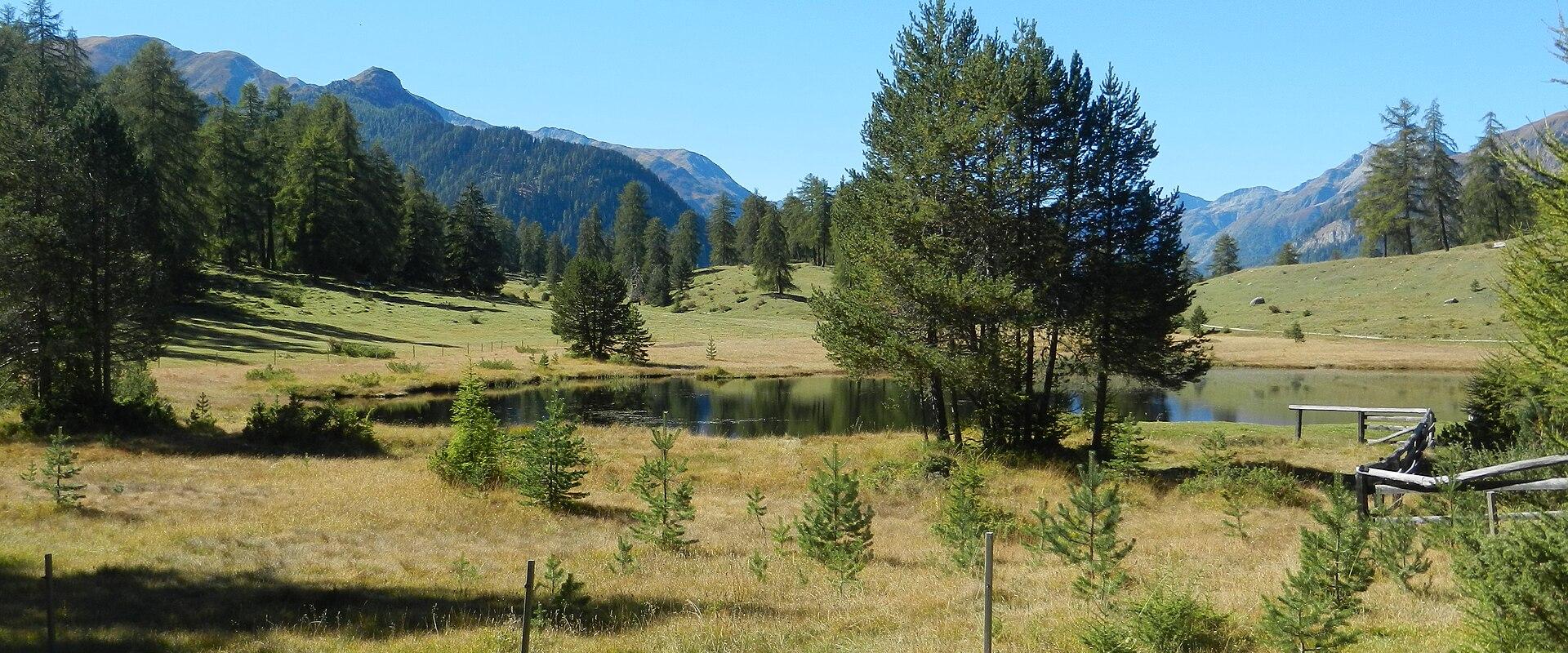
Lai Nair, sometimes written Lej Nair, is a small lake on a high, boggy plateau above the village of Tarasp, in the Lower Engadine, in the canton of Graubünden. The name is Romansh, the Rhaeto-Romance language still spoken in the valley, and it means black lake. The name fits: the water is dark, because the lake lies in a hollow with peat and acidic, humus-rich soil, and it takes its colour from the organic material washed in from the surrounding moor. Lakes of this kind are common in high, forested or boggy terrain, and they are often rich in specialised plants and insects, such as dragonflies and bog mosses, which thrive in the nutrient-poor conditions.
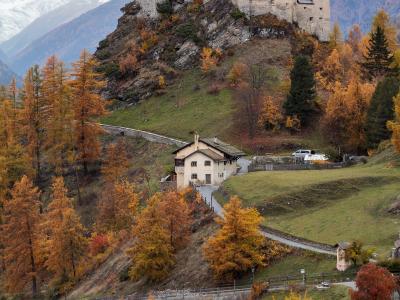
The surroundings of Tarasp are some of the most distinctive in the Alps. The village stands in a sunny, dry valley at around 1,400 metres, a long way from the busy resorts of the Upper Engadine, and it has a character that mixes mountain and spa traditions. Above the village stands the castle of Tarasp, a large white fortress on a rocky spur with a tall tower and red-roofed buildings, which dominates the valley and is one of the most impressive castles in Switzerland. The villages of the Lower Engadine, among them Scuol, are famous for their houses with painted and engraved façades, sgraffito decoration, deep window recesses and large arched doors, and the language and architecture give the valley a distinct identity. Mineral springs in the area, rich in carbon dioxide and salts, have been used for centuries and brought Scuol, Tarasp and Vulpera a reputation as spa towns.
The walk to the lake is a quiet one. A path leaves the village or its nearby hamlets and climbs through larch and pine forest onto the plateau, where the terrain opens into a landscape of moor, meadow and scattered trees. The ascent is moderate and takes an hour or so, depending on the route and the starting point. On the way, there are views of the valley, the castle and the mountains of the Lower Engadine, and the high plateau has a stillness that comes from being off the main tourist routes. The lake itself is small, with a ring of reeds and trees, and its dark surface reflects the sky and the forest, giving it a brooding, atmospheric look.
The area is part of a region of great natural interest, and near Tarasp the Swiss National Park, the oldest in the Alps, lies a short distance to the south-east, a protected area where wildlife and nature are left undisturbed. Walkers in the region may see deer, chamois, ibex and marmots, and in forests squirrels, jays and nutcrackers that feed on the seeds of Swiss stone pine. Visitors are asked to stay on paths and not to disturb the moor, which is sensitive to trampling, and dogs should be kept on a lead. Swimming is not the point of the lake, and the water is cold and murky.
Weather in the Engadine can change fast, so bring layers and rain protection and check forecasts. The lake suits walkers who like quiet places and nature, and it combines well with a visit to the castle and the villages of Scuol and Ftan. Allow two to four hours for the walk. The best season is from late spring to autumn, when paths are free of snow.
Categories
More photos coming soon
Hours & Fees
- Open
- Open 24 hours (natural lake)
- Admission
- Free
Hours and prices change, especially out of season. Check with the venue before you go.
Nearby Attractions
Other places to visit in Tarasp
Questions people ask
Quick Facts
Best Time to Visit
June to September offers mild weather, open trails, and cultural events—ideal for exploring Tarasp Castle, hiking, and enjoying Engadine’s alpine scenery.