





Bern is not a city of grand culinary claims, but its food is rooted in the farmland of the surrounding canton — the Emmental, the Seeland vegetable gardens and the Bernese Oberland — and it has given the world a couple of famous products. This guide covers what to eat, where to shop for it and how to fit it into a visit.
The Berner Platte
The signature dish of the canton is the Berner Platte (Bernese platter), a large plate of separately cooked meats served with sauerkraut, beans and potatoes. A typical platter includes smoked pork and beef, pork belly, bacon, tongue or sausages, with sauerkraut flavoured with juniper and green or dried beans. The traditional story dates it to March 1798, when Bernese troops returned from a victory over the French at Neuenegg and the community put together a celebration feast from whatever preserved food it had in late winter.
It is a heavy, cold-weather dish, mainly served in autumn and winter in traditional restaurants in the Old Town and the countryside. Portions are large; sharing is common.
Other Bernese dishes to look for
- Rösti — grated potato fried into a crisp cake. It is eaten across German-speaking Switzerland, and in Bern it is often served with a fried egg, cheese or bacon.
- Zibelechueche — onion tart, eaten all year but especially associated with the Zibelemärit, Bern's onion market on the fourth Monday of November.
- Bärner Haselnusslebkuchen — Bernese hazelnut gingerbread, a dense, spiced hazelnut cake often decorated with a white sugar bear, the city's symbol. Bakeries sell it year-round, and it is a classic before Christmas.
- Meringues with double cream — the Bernese Oberland, particularly Meiringen, claims a connection to the meringue, and meringues served with thick Gruyère-style double cream are a common dessert on menus in the canton.
- Emmentaler cheese — the cheese with holes takes its name from the Emmental valley, east of Bern.
Chocolate and malt: Bern's famous exports
Two internationally known products were developed in Bern:
- Toblerone was created in Bern in 1908 by Theodor Tobler and Emil Baumann. Its triangular shape and the word "Toblerone" combine the Tobler name with torrone, the Italian word for nougat. Production for many years took place in Bern; the brand's owner moved part of production abroad in 2023, which led to the Matterhorn being removed from the packaging because of Swiss origin rules.
- Ovomaltine (known as Ovaltine in English-speaking countries) was developed in Bern by the Wander company in the early 20th century, based on malt extract. Swiss Ovomaltine is still widely sold, including the crunchy spread.
Both are easy to find in any supermarket, and they make light, inexpensive souvenirs.
Markets: where locals shop
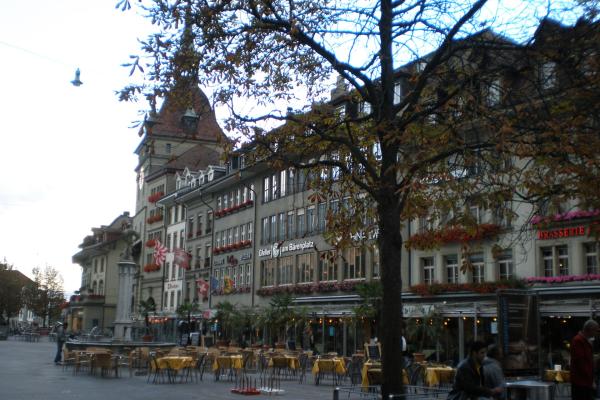
Bern's main farmers' market takes place on Tuesday and Saturday mornings on Bundesplatz in front of the Federal Palace, extending into Bärenplatz, Waisenhausplatz and nearby streets. For more than 130 years this market has filled the square on market days; stalls sell vegetables, fruit, cheese, bread, meat and flowers from the region, and the scene against the parliament building is one of the most attractive in the city. The fruit and vegetable stalls on Bärenplatz have longer hours in the warmer months. Opening times vary by season and stall, so arrive in the morning for the full selection.
Around the markets, Bern's arcaded Old Town has specialist shops — cheese counters, bakeries, butchers, chocolatiers and wine shops — that are worth browsing even if you are not buying.
Eating on a budget
Swiss restaurant prices are high, and Bern is no exception. To keep costs down:
- Buy picnic supplies at the market or at supermarkets (Coop and Migros both have branches near the station and in the centre) and eat by the Aare or in the Rose Garden.
- Look for daily lunch menus (Tagesmenü), which many restaurants offer at lower prices on weekdays.
- Drink tap water: Bern has more than a hundred public fountains, and the water is drinkable unless signed otherwise.
Fitting food into a visit
A food-focused day might start at the Tuesday or Saturday market on Bundesplatz, continue through the arcades of Marktgasse and Kramgasse for bakeries and cheese shops, and end with a traditional dinner. Visitors with more time can take the train into the Emmental, where a show dairy in Affoltern im Emmental demonstrates traditional cheesemaking, or to Trubschachen, home of the Kambly biscuit factory and its shop. Both are reachable by public transport in about an hour.
If you are in Bern on the fourth Monday of November, the Zibelemärit is the city's biggest food event; in December, the Christmas markets on Waisenhausplatz and around the Münster add mulled wine and seasonal snacks.