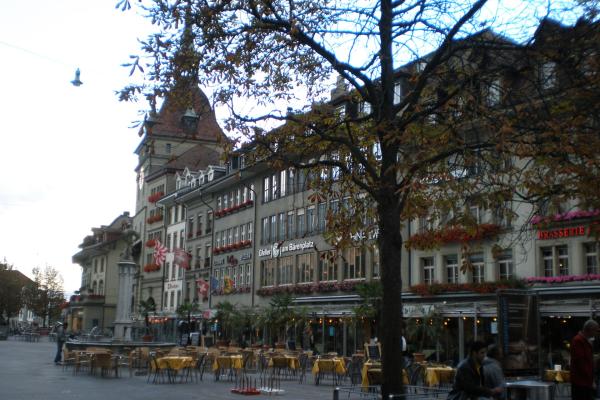
Once a year Bern's Old Town turns into an onion market. The Zibelemärit (Bernese German for "onion market") fills the streets and squares around the Federal Palace with stalls of braided onions, garlic and onion-based food, and it draws tens of thousands of visitors in a single day. It is one of the best-known folk events in Switzerland and an easy day trip from anywhere on the Swiss rail network.
When it takes place
The Zibelemärit is held on the fourth Monday of November. In 2026 that is Monday 23 November; in 2027 it falls on Monday 22 November. Be careful with sources that describe it as "the last Monday of November" — in a year like 2026, when November has five Mondays, that would put you in Bern a week late.
Official hours run from 6:00 to 18:00, but the first sales traditionally happen much earlier, around 4:00, when locals arrive to pick the best onion braids before the crowds build. It is a working Monday for most of Switzerland, so the city is busy with commuters as well as market-goers.
A short history
A popular story links the market to the fire that destroyed much of Bern in 1405: farmers from the surrounding countryside are said to have helped rebuild the city and been rewarded with the right to sell their produce. Historians are sceptical. An autumn market was formally introduced in 1439, and onions only appear prominently in official records in the mid-19th century, around the time the railway made it easier for growers to bring large quantities into the capital. Whatever its origins, the market has grown into a full day of trading, eating and celebration, with roughly 50 tonnes of onions sold in a typical year.
What you will find on the stalls
Onions are the point, and they come in decorative forms as well as by the bag. Look for:
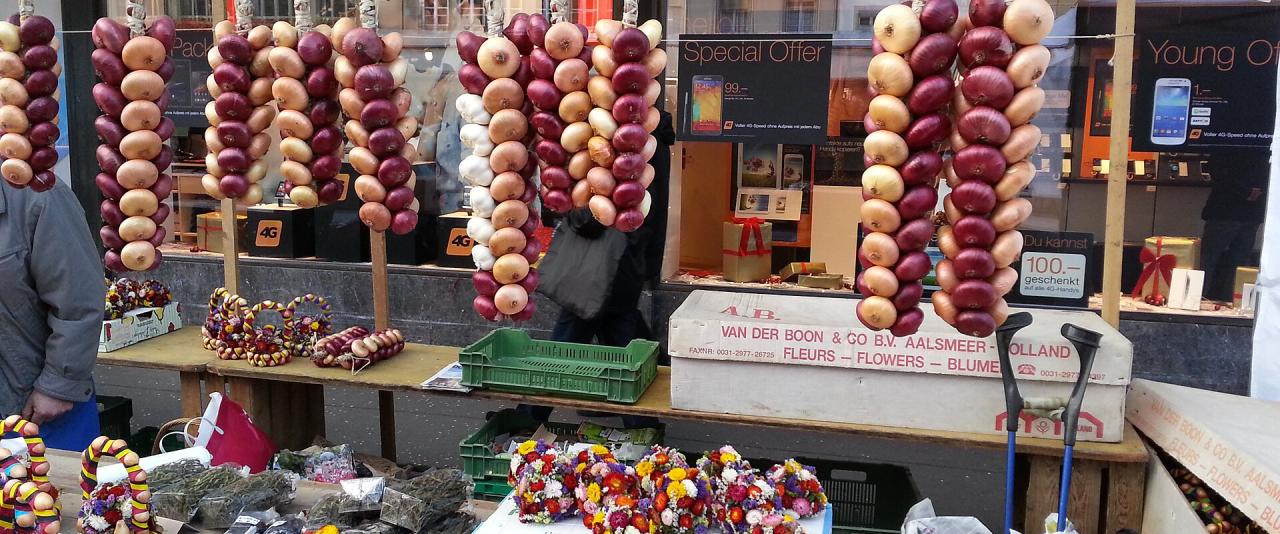
- Onion braids (Zwiebelzöpfe) in red, white and yellow onions, often finished with dried flowers. They keep for weeks in a cool, dry place and make a practical souvenir.
- Onion wreaths and figures woven from onions and garlic.
- Garlic braids, sold alongside the onion work.
- Ceramics: small glazed pottery pieces are a long-standing Zibelemärit souvenir, and many visitors pick up a little item each year.
Food is the other draw. Onion tart (Zwiebelkuchen or Zibelechueche), onion soup, cheese tart, bratwurst with onions and mulled wine (Glühwein) are sold from stands throughout the Old Town. Fairground sweets such as roasted almonds, cotton candy and Magenbrot (spiced gingerbread pieces) round it out. Expect to eat standing up or perched on a ledge; restaurant tables in the centre fill quickly.
The confetti battle
In the afternoon the mood changes. The market becomes a street party, and groups of young people throw confetti at each other — and at passers-by — in what Bernese call the Konfettischlacht. Plastic hammers also make an appearance. It is good-natured, but if you are carrying a camera, a pram or shopping you want to keep clean, do your buying in the morning and decide whether you want to stay for the afternoon. Confetti will end up in your hood, pockets and hair either way.
How to plan your visit
Arrive early. The best onion braids sell first, and the narrow arcaded streets (the Lauben) are much easier to walk before about 10:00. Arriving between 5:00 and 8:00 gives you the fullest stalls and the thinnest crowds. If you are coming from another city, check the first trains of the day — Bern is about an hour from Zurich and Basel and under two hours from Geneva.
Take the train. Bern station is a short walk from the market streets around Bundesplatz, Bärenplatz and Waisenhausplatz. Driving into the centre on market day is not practical.
Dress for a cold, long day. Late November mornings in Bern are often near freezing and sometimes wet. Warm layers, gloves and waterproof footwear make the early start far more pleasant.
Bring cash and card. Most stands accept cards or the Swiss payment app TWINT, but a small amount of cash in Swiss francs is useful for quick purchases.
Watch your bags. The crowds are dense in the middle of the day, and the arcades become bottlenecks.
Making a day of it
Because the market fills the Old Town, much of Bern's centre is part of the experience: the Zytglogge clock tower, the arcades of Kramgasse and Marktgasse, and the terrace beside the Federal Palace are all within a few minutes' walk. If you want a break from the crowds, walk down to the river Aare or across to the Rose Garden for a view back over the rooftops. Museums such as the Zentrum Paul Klee and the Bern Historical Museum are outside the market zone and are a quieter way to spend the afternoon.
After the Zibelemärit, Bern's Advent season begins: the city's Christmas markets usually open in late November and run until shortly before Christmas, so a later trip in December is an alternative if you prefer smaller crowds.