







- Admission
- Free admission
- Where
- St. Gallen, Eastern Switzerland
- Directions
- Directions
The Abbey of St. Gallen is the historic centre of the Swiss city that bears its name, and its story is one of the longest in Swiss history. Tradition says that in the early 7th century the Irish monk Gallus, a companion of the missionary Columbanus, settled as a hermit in the wooded valley of the Steinach, and that a small cell grew up around Saint Gall’s hermitage. In 719, the priest Othmar organised the community as a Benedictine monastery, and over the following centuries the abbey became one of the most important centres of learning and culture in Europe, with a school, a scriptorium where monks copied manuscripts and an Abbey Library that attracted scholars from far away. In the Carolingian period, it produced and preserved texts that shaped medieval education, and the famous plan of an ideal monastery, drawn in the early 9th century and known as the Plan of St. Gall, is still kept in the library.
The abbey grew rich and powerful, becoming a political force as well as a religious one. Its abbots were princes of the Holy Roman Empire, ruling a territory known as the Abbey Lands, and their influence extended through much of eastern Switzerland, the region that includes Appenzell. The town of St. Gallen grew up beside the abbey and in time became its rival, adopting the Reformation in the 16th century while the abbey remained Catholic, which led to a long separation of the abbey precinct from the town. The abbey was dissolved in 1805, after the upheavals of the Napoleonic period, and its church became a cathedral. Since 1983, the whole group of buildings has been inscribed on the UNESCO World Heritage list as a remarkable example of a Carolingian monastery that developed into a Baroque complex.
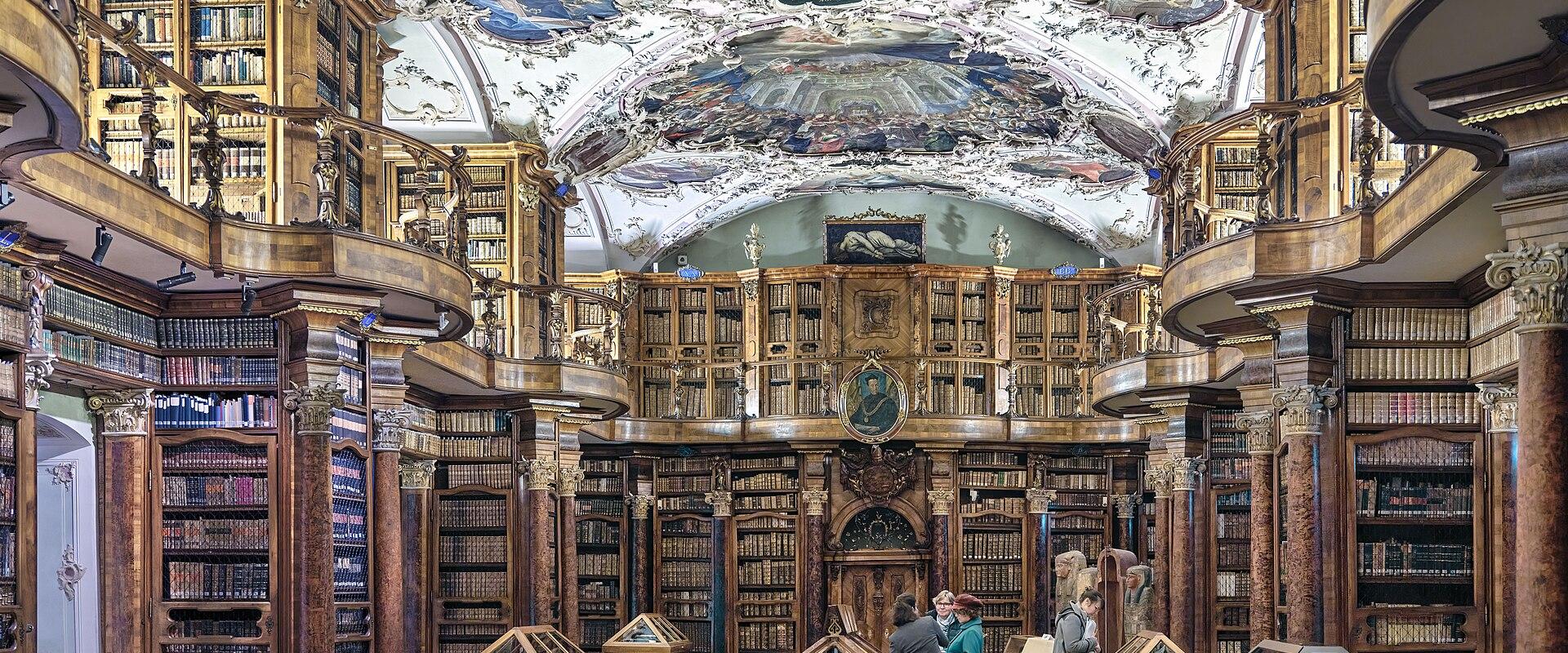
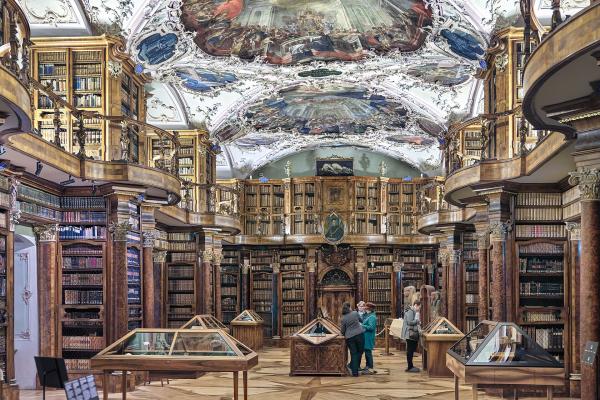
The buildings seen today are largely from the 18th century, when the abbey was rebuilt in the Baroque style. The cathedral, with its twin towers, grand nave and rich stucco and painting, was constructed in the 1750s and 1760s and is among the finest Baroque churches in Switzerland. The library hall, built at the same time, is a masterpiece of rococo design, with a gallery, carved wood and ceiling paintings, and it contains about 170,000 volumes, among them some 2,100 manuscripts, many over a thousand years old. Among the unexpected items is an ancient Egyptian mummy named Shepenese, which has been in the abbey since the 19th century. The library is a living institution as well as a museum, serving scholars and holding exhibitions.
The abbey precinct itself is open throughout the year, and visitors can walk through the courtyards and see the cathedral, while the library has its own opening times and occasionally closes for maintenance or special events, so check before you go. The surrounding old town of St. Gallen, with its oriel windows and painted facades, makes a good continuation.
The abbey suits history lovers, readers, architecture fans and anyone interested in medieval learning. Allow half a day for the abbey and the old town.
Categories
More photos coming soon
Admission Fees
- Admission
- Free admission
Hours and prices change, especially out of season. Check with the venue before you go.
Nearby Attractions
Other places to visit in St. Gallen
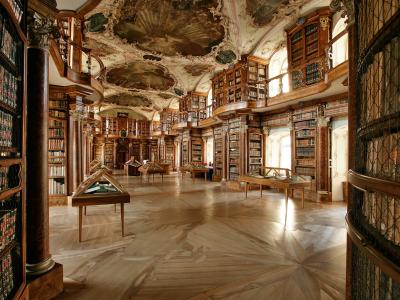
Abbey Library Of St. Gallen (St. Gallen)
World’s oldest medieval library with ancient manuscripts
Cultural Experiences · History & Heritage
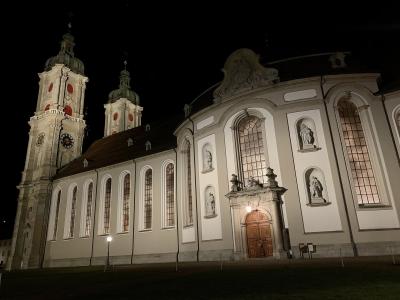
St. Gallen Cathedral (Abbey Cathedral) (St. Gallen)
Baroque cathedral with twin rotundas and frescoes
Cultural Experiences · History & Heritage
Mühleggbahn & Drei Weieren (Three Ponds) (St. Gallen)
Historic ponds and funicular near St. Gallen Abbey
Activities & Adventure · Natural Wonders

Abbey District & Abbey Of St. Gall (St. Gallen)
UNESCO Abbey with Switzerland’s oldest library
Cultural Experiences · History & Heritage
Questions people ask
Quick Facts
Best Time to Visit
Visit from late May to early September for mild temperatures, sunny days, and vibrant outdoor festivals.