

- Where
- Saint-Saphorin, Lake Geneva
- Directions
- Directions
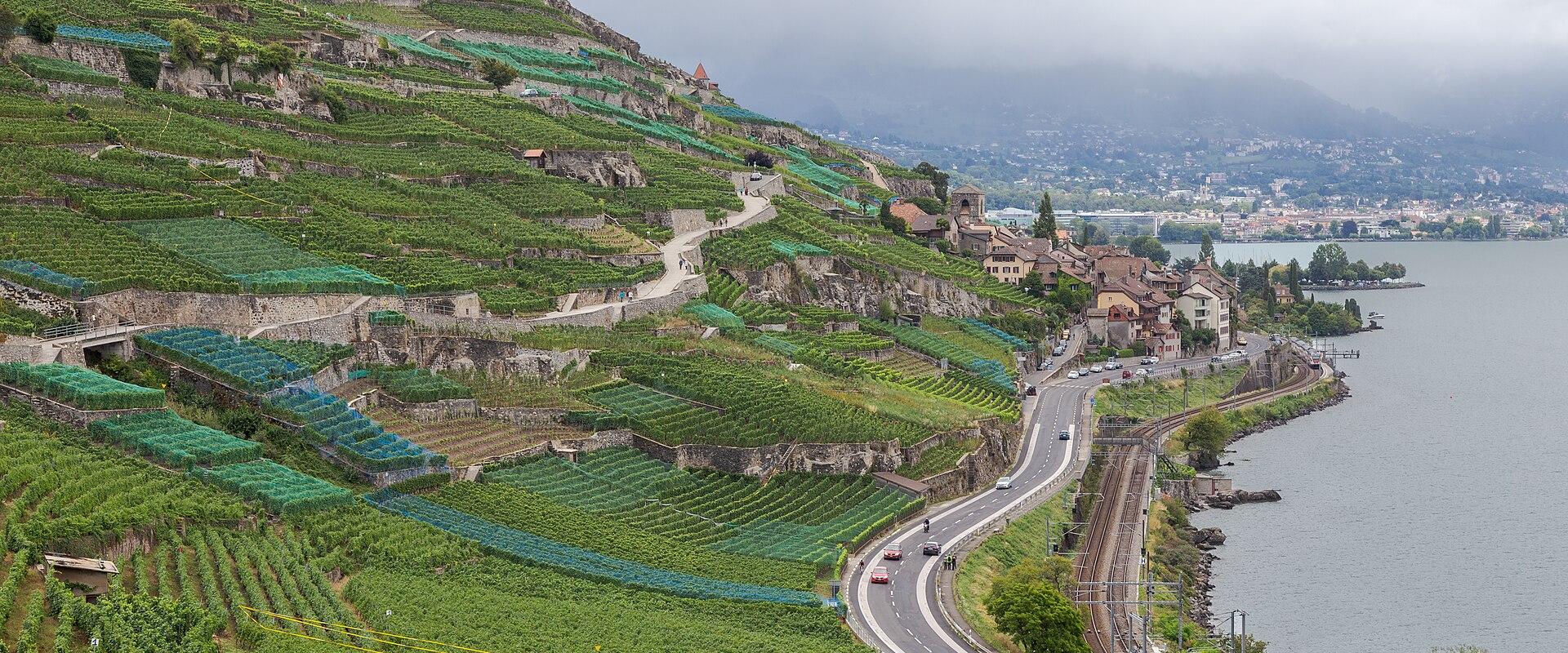
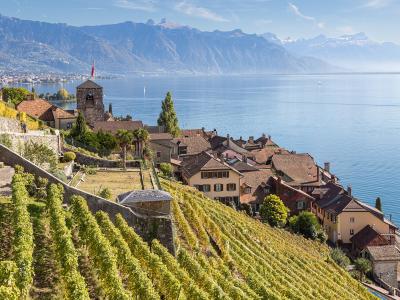
The Lavaux vineyards stretch for about thirty kilometres along the northern shore of Lake Geneva, in the canton of Vaud, and they are among the best-known wine landscapes in Europe. In 2007 the area was added to the UNESCO World Heritage list, in recognition of a landscape shaped over almost a thousand years by growers who built terraces on slopes too steep for normal farming. The village of Saint-Saphorin, near the middle of the area, is one of the best bases for exploring it, and it shows the character of the region in miniature, with its steep lanes, old stone houses and views down to the water.
The origins of the vineyards go back to the Middle Ages, when monks of the Cistercian and Benedictine orders planted vines here and built the first terraces. Over time the growers added walls, stairs and paths until the entire hillside was a succession of narrow steps, held in place by stone retaining walls that in some places are several metres high. The result is one of the most striking examples of terraced agriculture in Europe. The site's microclimate is a major reason for its success. The vines receive light from three sources: direct sunshine from the south, light reflected from the surface of the lake and heat stored in the stone walls, which keep the ground warm into the night.
The main grape is Chasselas, a white variety that thrives here and produces dry, delicate wines with a mineral touch that reflect the soil they grow in. The wines of Saint-Saphorin and neighbouring villages carry appellation labels that name their origin, and the Dézaley and Calamin vineyards are among the most prestigious. Many wines are meant to be drunk young and fresh with cheese, fish from the lake or simple local dishes, though some can age well. Red wines, mostly Pinot Noir and Gamay, are also made, though in smaller quantities.
There are several ways to see the vineyards. Walking is the best, along paths that cross the terraces and link the villages, with views of the lake and the Alps of Savoy across the water. The region can also be visited by bicycle, though the slopes are steep, or by tourist train, including a panoramic train known as the Train des Vignes that runs between Vevey and the heights of Chexbres and Puidoux, and by boat from the lake. In the villages, tasting cellars called caveaux welcome visitors, and small restaurants serve traditional dishes such as cheese fondue, fillets of perch and sausage baked in pastry.
The local culture is bound up with wine. The most famous celebration is the Fête des Vignerons, a large festival held in Vevey about once in a generation, which is inscribed on the UNESCO list of intangible cultural heritage, and smaller wine events take place throughout the year. The best seasons to visit are late spring, when the vines are green, and autumn, when the harvest takes place and the leaves turn gold. Summers can be hot on the terraces, so carry water. Check opening times for cellars, since many require booking, and arrange transport if you plan to taste wine.
More photos coming soon
Nearby Attractions
Other places to visit in Saint-Saphorin
Questions people ask
Quick Facts
Best Time to Visit
April to October offers mild weather, lush vineyards, and ideal conditions for wine tasting, hiking, and enjoying Saint-Saphorin’s lakeside scenery.