







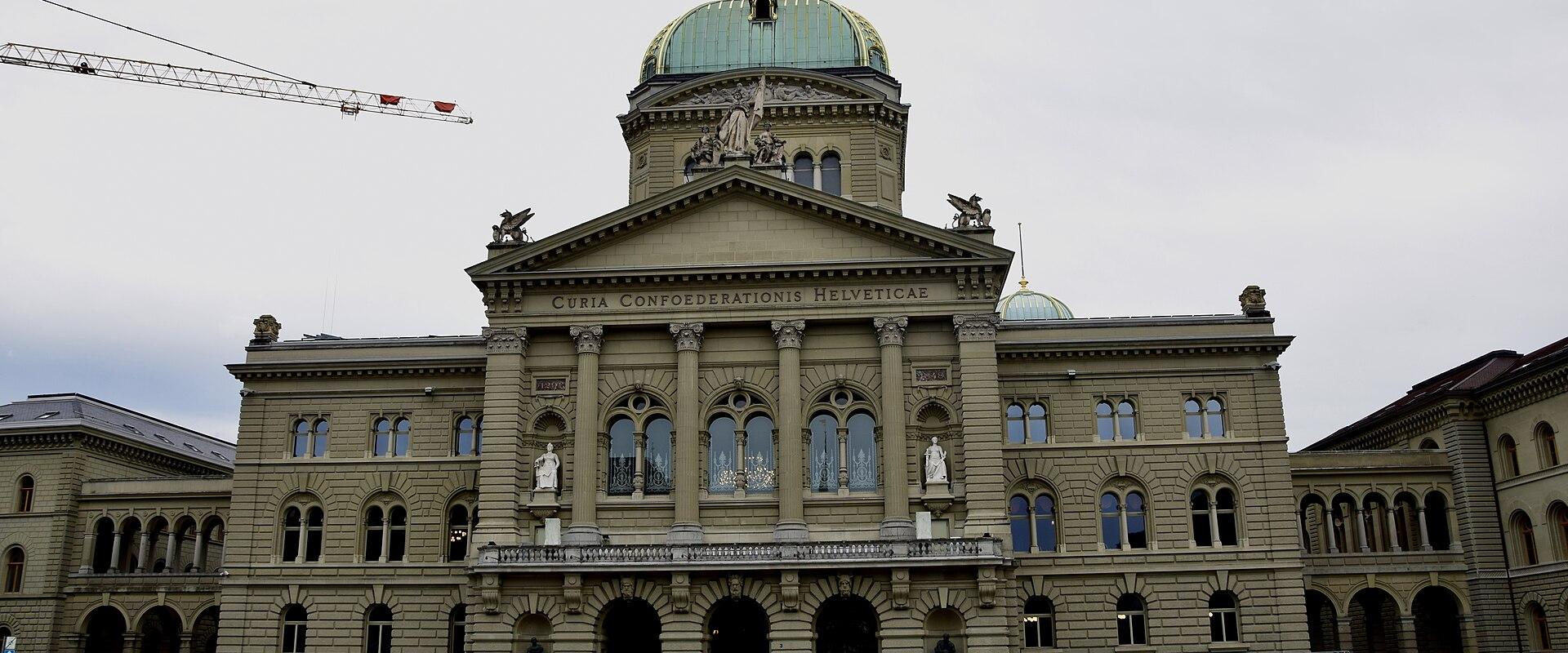
Bundeshaus (Parliament Building)
Swiss Federal Assembly seat blending history and culture
- Where
- Bern, Bernese Oberland
- Directions
- Directions
The Bundeshaus is the seat of the Swiss federal government and parliament, a large sandstone building on the southern edge of Bern's old town, overlooking the Aare. Switzerland has no official capital in the constitutional sense, and Bern is formally called the federal city, but the Bundeshaus is where the country's laws are made. It houses the two chambers of the Federal Assembly, the National Council and the Council of States, and the offices of the Federal Council, the seven-member executive. The building is also a symbol of the country's political culture, where consensus, regional balance and referendums play a central role.
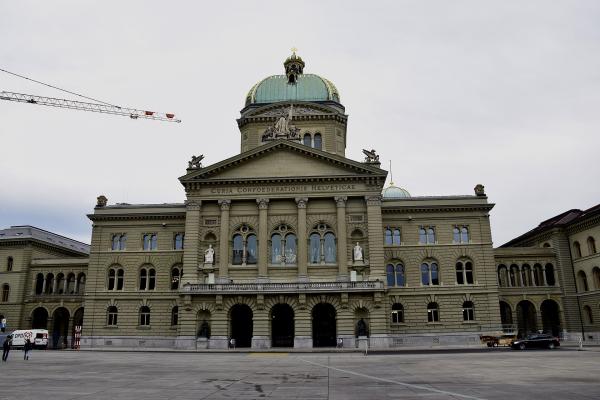
The present Bundeshaus was built at the end of the nineteenth century, in 1894 to 1902, to a design by the architect Hans Wilhelm Auer. Its style is a mix of Neo-Renaissance and other historic references, with a central dome topped with a lantern and flanked by two wings. Inside, the entrance hall and the dome hall are decorated with sculpture, mosaics and stained glass, and the dome carries the coats of arms of the cantons. Under the dome stands a monumental sculpture of three men taking an oath, a reference to the legendary founding of the Confederation on the Rütli meadow. Inscribed above, in Latin, is the building's formal name, which avoids favouring any of the national languages. The decoration celebrates the history and the diversity of the country, and it rewards slow looking.
In front of the building is Bundesplatz, a large paved square that is used for markets, concerts and demonstrations. Set into the paving is a fountain with jets of water that rise from the ground, one for each canton, and children like to run through them in hot weather. The square is a lively place and a good starting point for exploring the surrounding streets. Behind the building a terrace gives a view over the Aare and, on clear days, the peaks of the Bernese Alps, which makes it a popular place to sit.
Visitors can enter the building on guided tours, which are normally free of charge. They must be booked in advance, usually online, and visitors need to show official photo identification. The tours cover the public areas, the council chambers and the history of the building, and they are available in several languages. Tours are limited when parliament is in session, since the chambers are in use, but visitors can sometimes watch a debate from the public gallery, which is an interesting way to see Swiss politics at work. Sessions are held four times a year, and the dates are listed on the parliament's website.
The Bundeshaus suits visitors interested in politics, architecture and history, as well as families with older children who can follow a guided tour. A tour takes about an hour, and the square outside can be seen at any time. The old town, the Aare and the Rosengarten are close, so a visit can be combined with a walk around the city. Check the parliament's website for dates, booking details and security rules before you go.
More photos coming soon
Nearby Attractions
Other places to visit in Bern

Zytglogge (Clock Tower)
Medieval clock tower with hourly mechanical show
Cultural Experiences · History & Heritage

Wander Through The Old Town (Bern Old Town)
UNESCO-listed medieval city with sandstone arcades
Cultural Experiences · History & Heritage

Gurten (visit The Gurten Hill)
Bern’s local mountain with panoramic views
Activities & Adventure · Natural Wonders
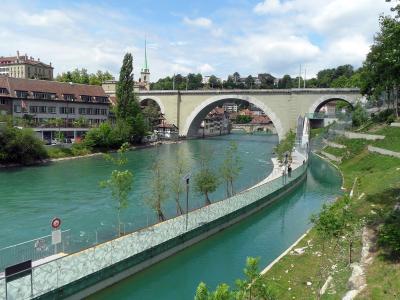
BärenPark (Bear Park)
Historic bear habitat with riverfront park
Activities & Adventure · Natural Wonders
Questions people ask
Quick Facts
Best Time to Visit
Early July to mid-September offers warm weather, lively markets, and ideal conditions for exploring Bern’s old town, river, and outdoor attractions.